
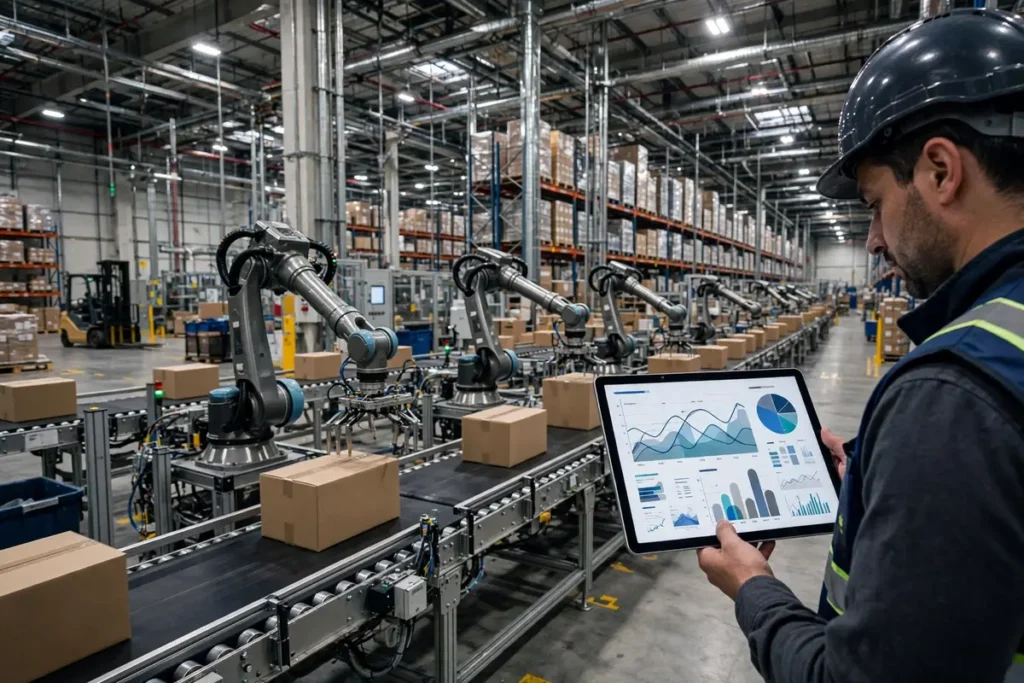
AI Tools for Supply Chain: 8 Proven Workflows
Supply chains run on predictions. How much will customers order next quarter? Which supplier might fail? Where will the next disruption hit? For decades, planners answered these questions with spreadsheets, gut feel, and historical averages. AI tools for supply chain management have changed the equation — modern systems spot patterns across millions of data points that no human team could process, and they keep learning as conditions change.
This is not hype-driven speculation. Large retailers, manufacturers, and logistics companies now run AI forecasting, route optimization, and supplier-risk monitoring in production, reporting measurable results: fewer stockouts, lower inventory carrying costs, faster response to disruptions. The technology has matured past the pilot stage.
In this guide, we walk through eight proven workflows where ai tools for supply chain deliver real value in 2026 — what each workflow does, which tools power it, how to roll it out, and what ROI to expect. Whether you run a five-person ecommerce operation or a global manufacturing network, there is a practical entry point here.
Workflow 1: Demand Forecasting

What it does: Predicts future demand at the SKU, store, and region level by combining historical sales with external signals — weather, promotions, holidays, economic indicators, even social media trends.
Why it matters: Forecasting errors are expensive in both directions. Overstock ties up cash and warehouse space; stockouts lose sales and customers. AI forecasting typically cuts forecast error by 20–50% versus traditional methods because it weighs hundreds of variables instead of a handful.
Tools to consider: Dedicated demand-planning platforms with machine learning engines, plus the forecasting modules inside major ERP suites. For background on the analytics foundations, see our guide to AI tools for data analysis.
Rollout tip: Start with your top 20% of SKUs by revenue. Clean two years of sales history first — AI amplifies data quality problems, so garbage in means garbage out. Run the AI forecast in parallel with your existing process for one quarter before switching over.
Workflow 2: Inventory Optimization
What it does: Continuously calculates the right stock level for every location — balancing service-level targets against carrying costs, lead-time variability, and demand uncertainty.
Why it matters: Most companies carry 20–30% more safety stock than they need because static reorder formulas cannot adapt. AI tools for supply chain recalculate optimal levels dynamically, often freeing 15–25% of working capital tied up in inventory while maintaining or improving fill rates.
How it works in practice: The system ingests lead times, demand forecasts, supplier reliability scores, and cost parameters, then recommends reorder points and order quantities per SKU per location. Planners review exceptions rather than crunching every item.
Rollout tip: Define your service-level targets explicitly (e.g., 98% fill rate on A-items) before tuning the system. The AI will optimize toward whatever you tell it to — make sure the target reflects real business priorities.
Workflow 3: Route and Load Optimization
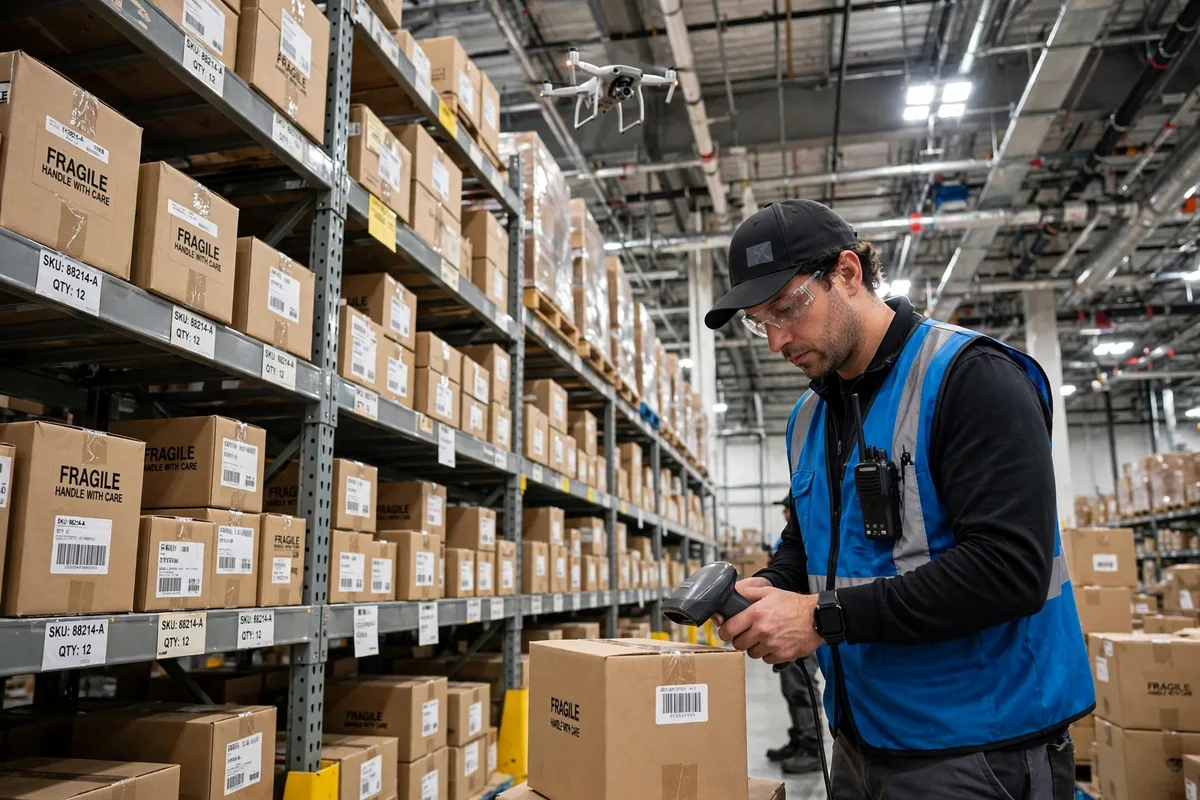
What it does: Plans delivery routes and loads considering traffic, delivery windows, vehicle capacity, driver hours, fuel costs, and even carbon targets — recalculating in real time when conditions change.
Why it matters: Transportation is often the largest logistics cost line. AI routing typically cuts mileage 10–20% and improves on-time delivery simultaneously. For fleets, that is fuel savings, fewer vehicles needed, and happier customers.
Tools to consider: Standalone route-optimization platforms for last-mile delivery, plus transportation management systems (TMS) with AI modules for freight. Real-time reoptimization — rerouting around a traffic jam or a failed delivery — is where the newest ai tools for supply chain pull ahead of legacy software.
Rollout tip: Pilot on one depot or region. Measure baseline KPIs (cost per stop, on-time percentage, miles per route) for a month before and after. Driver buy-in matters — involve them early and show them the system reduces their worst days, not just company costs.
Workflow 4: Supplier Risk Monitoring
What it does: Watches your supplier base continuously — financial health signals, news events, weather and geopolitical risks, quality trends, delivery performance — and flags emerging risks before they become disruptions.
Why it matters: The pandemic taught every company that single-source dependencies and opaque supplier networks are existential risks. AI monitoring scales what used to require an analyst team: tracking thousands of suppliers across news, filings, and shipping data in near real time.
How it works in practice: The system builds a risk score per supplier from dozens of signals, alerts you to deterioration, and suggests alternatives from your approved vendor list. Advanced setups map sub-tier suppliers (your supplier’s suppliers) where data is available. For the automation mindset behind this, see how to automate repetitive tasks with AI.
Rollout tip: Start monitoring your top 50 suppliers by spend plus any sole-source suppliers regardless of spend. Risk monitoring is only useful if someone acts on the alerts — assign clear ownership for each risk tier.
Workflow 5: Warehouse Automation and Slotting
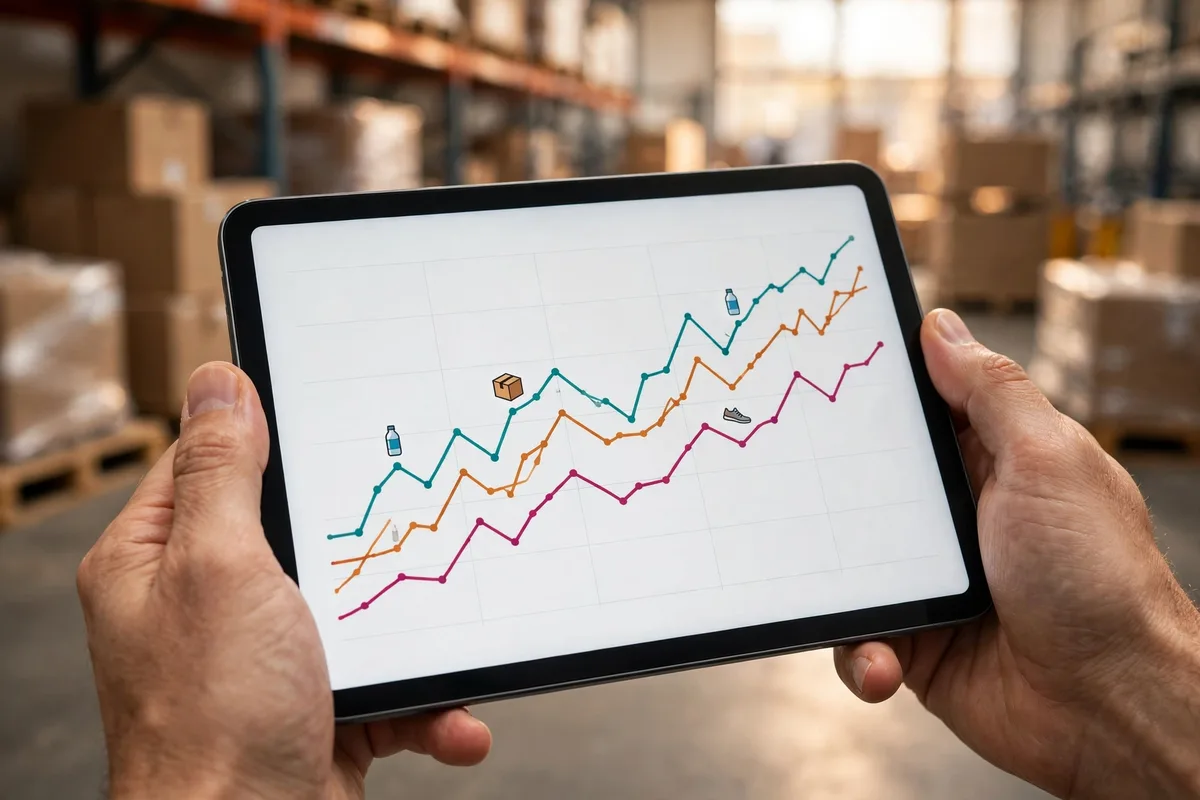
What it does: Optimizes warehouse operations — where to store each SKU (slotting), how to batch pick orders, when to trigger replenishment, and in advanced facilities, how to direct robots and autonomous mobile robots (AMRs).
Why it matters: Labor is the biggest warehouse cost, and travel time (walking between picks) is the biggest labor waste. AI slotting places fast-moving items optimally and re-optimizes as demand patterns shift seasonally. Facilities report 15–30% productivity gains from AI-directed slotting and pick-path optimization alone.
Rollout tip: You do not need robots to benefit. Slotting optimization and pick-path planning work in conventional warehouses with human pickers. Start there; add automation hardware only after the software gains are captured.
Workflow 6: Predictive Maintenance for Fleet and Equipment
What it does: Predicts equipment failures before they happen by analyzing sensor data — vibration, temperature, operating hours, maintenance history — from trucks, forklifts, conveyor systems, and production machinery.
Why it matters: An unplanned breakdown of a key asset stops the line or strands a shipment. Predictive maintenance typically cuts unplanned downtime 30–50% and extends asset life. For fleets, it also catches safety-critical issues (brakes, tires) before they cause incidents.
Rollout tip: Begin with your highest-cost-failure assets — the machines or vehicles whose breakdown hurts most. You need sensor data or at least good maintenance logs; the AI cannot predict from nothing. Many telematics providers now bundle predictive features, so check what your existing fleet system already offers.
Workflow 7: Procurement and Spend Analytics
What it does: Analyzes purchasing data to find savings — duplicate suppliers, off-contract buying, price anomalies, consolidation opportunities — and increasingly, drafts RFQs, evaluates bids, and negotiates routine purchases autonomously.
Why it matters: Most mid-size companies leak 5–10% of addressable spend through unmanaged buying. AI spend analytics finds the leaks in days instead of the months a manual spend cube takes. Autonomous sourcing for tail spend (low-value, high-volume purchases) frees procurement teams for strategic negotiations.
How it works in practice: The system classifies every purchase order, benchmarks prices against market data, flags anomalies, and routes savings opportunities to the right owner. Leading AI business automation tools now extend these capabilities to smaller companies that previously could not afford procurement analytics.
Rollout tip: Clean your supplier master data first — duplicate supplier records are the number one reason spend analytics projects underdeliver. Then run the analysis quarterly, not once; savings decay as buying patterns drift.
Workflow 8: Disruption Response and Control Towers
What it does: Acts as an AI-powered control tower — monitoring the entire network, simulating disruption scenarios, and recommending (or executing) contingency plans when things go wrong: reroute shipments, shift production, activate backup suppliers.
Why it matters: Speed of response determines how much a disruption costs. Companies with AI-assisted response contain incidents in hours that take others weeks. Digital-twin simulations let you rehearse responses to port closures, supplier failures, or demand spikes before they happen.
Rollout tip: This is the most advanced workflow on the list — build toward it, do not start here. It depends on data flowing from the other seven workflows. Start with a digital twin of one product line or region, prove the concept, then expand.
AI Tools for Supply Chain: Build vs Buy
| Approach | Best for | Cost profile | Time to value |
|---|---|---|---|
| ERP-native AI modules | Companies on SAP, Oracle, etc. | Included or add-on license | Fastest (data already there) |
| Best-of-breed point tools | Specific pain (forecasting, routing) | SaaS subscription | Fast for one workflow |
| Custom ML development | Unique operations, data science team | High upfront, low marginal | Slowest, highest ceiling |
Most companies should buy before they build. The packaged ai tools for supply chain have absorbed a decade of learnings; custom models only make sense when your operation is genuinely unusual. For authoritative background on the enterprise landscape, see IBM’s supply chain AI overview and Oracle SCM.
A Practical Rollout Roadmap
Do not try to deploy all eight workflows at once. The companies that succeed follow a sequence:
Phase 1 (months 1–3): Foundation. Pick one high-pain workflow — usually demand forecasting or inventory optimization. Clean the data it needs. Run parallel with existing processes. Prove ROI on one product line.
Phase 2 (months 4–9): Expansion. Roll the proven workflow across the network. Add a second workflow (often routing or supplier risk). Build the data pipelines that multiple workflows will share.
Phase 3 (months 10–18): Integration. Connect workflows so they feed each other — forecasts drive inventory, inventory drives procurement, risk signals drive contingency plans. This is where compound returns appear.
Phase 4 (ongoing): Control tower. Layer disruption-response capabilities on top of the integrated foundation. Shift planners from firefighting to exception management and strategic work.
Change management is half the project
The technology is the easier half. Planners who have run spreadsheets for fifteen years need to trust the AI’s recommendations — which means involving them in tuning, showing them when the AI catches things they missed, and being honest about what it cannot do. The most successful rollouts frame AI as giving planners superpowers, not replacing them. No workflow on this list eliminates the need for human judgment; every one of them amplifies it.
Measuring ROI: What Good Looks Like
Track these metrics before and after each workflow rollout:
- Forecast accuracy: MAPE or WAPE improvement of 20–50% is the standard claim — verify it on your data.
- Inventory: Working capital freed, stockout rate, obsolete inventory written off.
- Transportation: Cost per unit shipped, on-time delivery rate, empty miles.
- Procurement: Savings captured as percentage of addressable spend, cycle time per sourcing event.
- Resilience: Mean time to detect and respond to disruptions, revenue at risk per incident.
Be skeptical of vendor ROI calculators. The honest approach: pilot on a defined scope, measure rigorously, then extrapolate. Most companies find that one or two workflows pay for the entire program within the first year.
FAQ
What are AI tools for supply chain?
AI tools for supply chain are software platforms that apply machine learning to logistics and operations — forecasting demand, optimizing inventory and routes, monitoring supplier risk, and responding to disruptions. They replace static rules and spreadsheets with systems that learn from data and adapt to changing conditions.
How much do AI supply chain tools cost?
It varies enormously. Point solutions for small businesses start around a few hundred dollars per month. Mid-market SaaS platforms run $2,000–$20,000/month depending on scope. Enterprise ERP modules and custom builds can reach six or seven figures annually. Start with one workflow and one tool; expand on proven ROI.
Do I need a data science team to use them?
No — modern packaged tools are built for operations teams, not data scientists. You need clean operational data and someone who understands your supply chain deeply. Custom model development is the only scenario requiring in-house data science, and most companies should buy before building.
How long until we see results?
A focused pilot on one workflow typically shows measurable results in 8–12 weeks. Full network rollout and integration take 12–18 months. Be wary of vendors promising transformation in 30 days — the technology works, but data cleanup and change management take real time.
Can small businesses use AI for supply chain?
Absolutely. Cloud-based tools have brought capabilities that once required enterprise budgets down to SMB price points. A small ecommerce business can use AI demand forecasting and route optimization today for a few hundred dollars a month — the same workflows, scaled to fit.
Conclusion
The eight workflows in this guide — demand forecasting, inventory optimization, route optimization, supplier risk monitoring, warehouse slotting, predictive maintenance, procurement analytics, and disruption response — represent where ai tools for supply chain deliver proven, measurable value in 2026. Not pilots, not demos: production systems cutting costs and improving service levels right now.
The winning approach is boring in the best way: pick one painful workflow, clean its data, pilot rigorously, measure honestly, then expand. Respect the change-management challenge as much as the technology. Do that, and AI stops being a supply chain buzzword and becomes what it should be — the quiet engine that keeps your products flowing, your costs down, and your customers happy no matter what the world throws at your network.





Join the discussion
Have a question or a perspective to share?