
You get one shot at the interview and unlimited practice runs before it. Mock interviews with AI let you bomb safely — then walk in having already heard the hard questions.
AI for Interview Preparation: The Complete Guide (2026)
Interview preparation used to mean rehearsing answers in front of a mirror and hoping a friend would role-play the hiring manager. AI for interview preparation changes the economics of practice: you can now run unlimited mock interviews, draft structured answers, research companies deeply, and get feedback on your delivery — all before the real thing. This complete guide covers the workflows that work, the tools involved, and the critical line between preparation you should automate and judgment you must keep.
Why AI Works So Well for Interview Prep
Interviews test three things: knowledge (about the role and company), structure (can you answer clearly under pressure), and presence (do you seem like someone people want to work with). AI is excellent at the first two and useless at the third — which is exactly why it is a preparation tool, not a replacement for being a compelling candidate. Used correctly, it gives you:
- Unlimited repetitions: practice the same tough questions 20 times without boring a human partner.
- Instant structure: turn rambling experience into tight STAR-format answers.
- Company intelligence: synthesize earnings calls, reviews, news, and job postings into briefing notes.
- Honest feedback: AI will tell you your answer is vague; friends often will not.
Phase 1: Research the Company and Role with AI
Build a company briefing document
Feed the AI the company’s careers page, recent press releases, and the job description, then ask for a structured brief:
- Business model in plain English: what they sell, to whom, and how they make money.
- Recent developments: funding, launches, leadership changes, controversies from the last 12 months.
- Culture signals: language from employee reviews (Glassdoor, Blind) and the careers page — what do they reward?
- Role mapping: which 3–4 requirements in the posting matter most, and what evidence from your background maps to each.
Verify anything factual (dates, numbers, names) against primary sources. AI summaries of companies are useful but can conflate similarly named firms or hallucinate funding rounds — cross-check before you quote a fact in the interview.
Decode the job description
Paste the posting and ask: “What are the unstated requirements here? What problems is this hire meant to solve in the first 90 days?” Job descriptions describe duties; AI is good at inferring the pain behind them (“must thrive in ambiguity” = the team is chaotic; “wear many hats” = understaffed). This reframes your preparation from “list my skills” to “show I solve their problem.”
Research your interviewers
If you know names, ask AI to help organize public information: LinkedIn backgrounds, published talks, team org charts. Keep this ethical and professional — public professional information only, used to find genuine common ground and smart questions, not to manufacture false intimacy.
Phase 2: Draft Answers with the STAR Method
The STAR framework, AI-assisted
Most behavioral questions (“Tell me about a time when…”) are graded on structure: Situation, Task, Action, Result. AI’s best prep contribution is converting your raw memories into STAR answers:
Workflow:
- Brain-dump the raw story (messy, 300 words, no structure).
- Ask the AI to restructure it into STAR format, 90 seconds spoken (~200 words), with a clear result metric.
- Ask it to flag: vague claims, missing numbers, passive voice (“we decided” → what did you do?).
- Revise with your real details — AI cannot invent your accomplishments, and interviewers detect fabricated stories.
Build an answer bank
Create 8–12 STAR stories covering the universal question families:
- Leadership and influence without authority
- Conflict resolution
- Failure and what you learned
- Working with difficult stakeholders
- Tight deadlines and prioritization
- Data-driven decisions
- Mentoring or developing others
- Innovation or process improvement
Draft each with AI assistance, then memorize the beats, not the script. Recited answers sound robotic; internalized stories sound confident. Practice telling each story conversationally until the structure is invisible.
Prepare your “tell me about yourself”
This 60–90 second opener sets the interview’s trajectory. Formula: present (what you do now) → past (the 2–3 experiences that built you) → future (why this role is the logical next step). Have AI critique yours for the three common failures: too long, too chronological, no forward momentum.
Phase 3: Run AI Mock Interviews
How to set up an effective mock
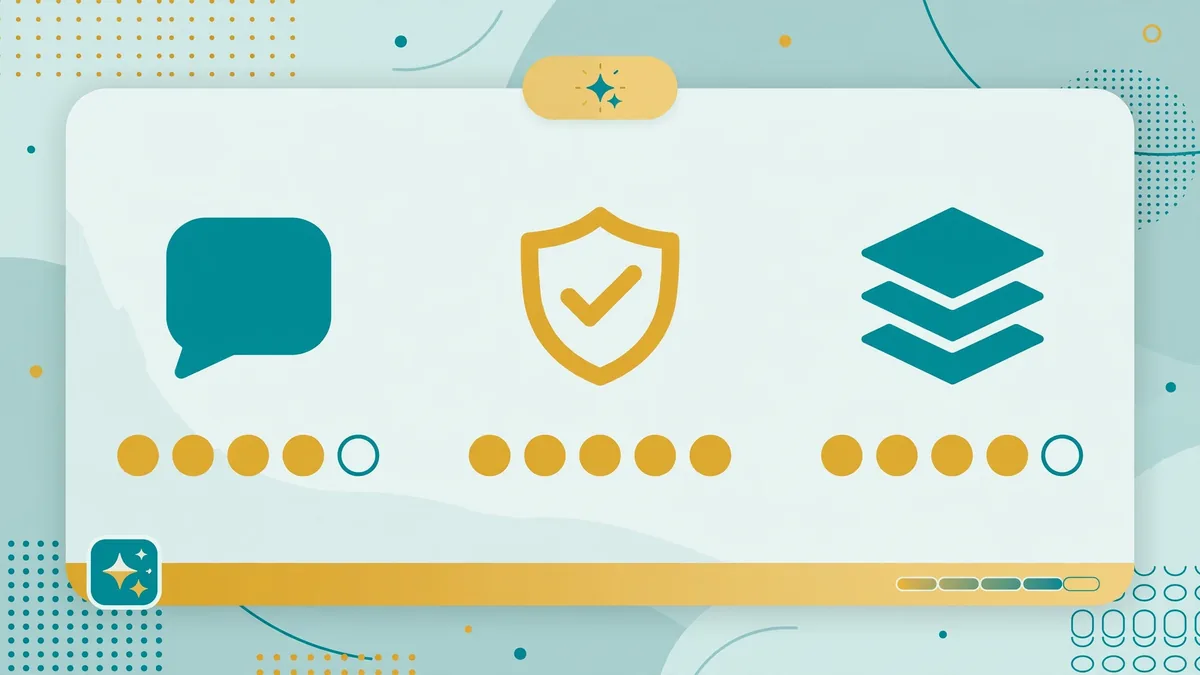
Modern chatbots can role-play interviewers convincingly. The setup that works:
- Give the AI the job description, company brief, and interviewer context.
- Instruct it: “Conduct a realistic 30-minute behavioral interview. Ask one question at a time. Follow up when my answers are vague. Score each answer 1–10 with specific feedback at the end.”
- Answer out loud (not typed) — typing lets you edit, which defeats the purpose.
- After each round, ask for: what was strong, what was vague, which answers need metrics, and 3 questions you should expect next time.
Difficulty progression
- Round 1: friendly interviewer, standard questions — build the answer bank.
- Round 2: skeptical interviewer — “That sounds vague, can you be specific?” trains you to add detail under pressure.
- Round 3: stress round — rapid-fire follow-ups, interruptions, “why should we hire you over other candidates?” This is uncomfortable and therefore useful.
- Round 4: role-specific deep dive — technical or case questions for your field.
What AI mock interviews cannot do
They cannot read your body language, test real chemistry, or replicate the anxiety of a human watching you think. Supplement AI practice with at least 1–2 human mocks (a friend, mentor, or paid coach) before important interviews. AI builds the content; humans test the delivery.
Phase 4: Prepare Smart Questions to Ask Them
Candidates are evaluated on their questions. Generate 10 with AI, then keep 4–5 genuine ones:
- “What does success look like in the first 90 days?”
- “What is the biggest challenge the team is facing right now?”
- “How does the team handle disagreement on technical direction?”
- “What happened to the last person in this role?”
- “What would make you excited to hire for this position?”
Avoid questions answerable from the website, and never ask about salary/benefits before they raise it (know your market rate from research, but let them open the topic).
What NOT to Outsource to AI
This is the section that protects you from self-sabotage:
- Do not fabricate experience. AI can help phrase your real accomplishments; it must never invent jobs, metrics, or stories. Background checks and skilled interviewers catch fabrications, and the cost is the offer plus your reputation.
- Do not use AI live during interviews. Real-time AI assistance during video interviews (a growing trend) is detectable and, at most employers, grounds for immediate disqualification. Some companies now explicitly screen for it.
- Do not let AI write your entire personality. If every answer sounds like a language model, you sound like everyone else using one. Your quirks, humor, and genuine enthusiasm are competitive advantages — keep them.
- Do not skip company-specific customization. Generic “why this company” answers are transparent. The research phase exists so your motivation sounds real — because it is.
- Do not outsource salary negotiation judgment. AI can provide market data ranges, but negotiation timing, tone, and trade-offs (title vs. salary vs. equity vs. remote) require human judgment about your priorities.
Tool Stack: What to Use
You do not need specialized “AI interview prep” apps for most of this — though several exist (Final Round AI, Interviewing.io’s AI features, Yoodli for speech feedback). A practical stack:
- A frontier chatbot (ChatGPT, Claude, or Gemini) for research briefs, STAR drafting, and mock interviews. Any of the three works; pick whichever you already use.
- A speech-feedback tool (Yoodli, Poised, or even your phone’s voice recorder) to catch filler words (“um,” “like,” “you know”) and pacing issues.
- A document (Notion, Google Docs) as your answer bank — organized by question family, with metrics bolded.
Total cost: $0–$20/month. Interview prep is one of the highest-ROI uses of AI that exists — a single offer can be worth tens of thousands.
Salary Research and Offer Evaluation with AI
Once interviews go well, AI helps with the numbers — but judgment stays human.
Market-rate research: Ask AI to synthesize published salary data for your role, level, and metro area from sources like Levels.fyi, Glassdoor, and job postings. Treat the output as a range to verify, not a quote — AI can blend seniorities or stale data. Cross-check against at least two primary sources before naming a number.
Total-compensation modeling: Have AI build a comparison table across offers: base salary, bonus target and historic payout rates, equity (and its vesting schedule, strike price, and the company’s valuation trajectory), benefits value, and remote-work flexibility. Candidates routinely overvalue base salary and undervalue equity or benefits — a structured table corrects this bias.
Negotiation preparation: Role-play the negotiation conversation with AI playing the recruiter: practice anchoring high without bluffing, responding to “what are your salary expectations?” (answer with a researched range, not a single number), and trading concessions (a lower base for a signing bonus, or title for remote days). Prepare your walk-away number privately before any live conversation — AI can help you think through it, but the decision is yours.
What AI cannot do here: read the hiring manager’s flexibility, sense when pushing further risks the offer, or weigh your personal priorities (commute vs. pay vs. growth). Use AI for data and rehearsal; make the final calls yourself.
The Week-Before Checklist
- [ ] Company brief complete and fact-checked
- [ ] 8–12 STAR stories drafted, metrics verified
- [ ] “Tell me about yourself” under 90 seconds
- [ ] 3 AI mock interviews completed (easy → skeptical → stress)
- [ ] 1 human mock completed
- [ ] 5 genuine questions prepared for them
- [ ] Logistics confirmed (link, time zone, interviewer names, what to bring)
- [ ] Salary range researched; walk-away number decided privately
Frequently Asked Questions About AI Interview Preparation
Can AI really conduct a useful mock interview?
Yes, for content and structure practice. Instruct the chatbot to role-play the interviewer, ask one question at a time, and give scored feedback. It is excellent at catching vague answers and missing metrics. It cannot evaluate body language or real interpersonal chemistry — pair it with at least one human mock.
Is it cheating to use AI to prepare for interviews?
No. Preparation has always been allowed and expected — AI is a more effective version of rehearsing with a friend or reading interview guides. The line is using AI during the interview to generate answers live, which most employers consider dishonest.
How do I avoid sounding like I memorized AI-written answers?
Memorize story beats, not sentences. Know your Situation in one line, your three key Actions, and your Result metric — then tell it conversationally. Practice out loud until the STAR structure disappears into natural storytelling.
What if the interviewer asks something I never prepared for?
Use the same structure on the fly: pause, pick a relevant story from your bank, and frame it in STAR. Interviewers grade composure and structure as much as content. A two-second pause to think looks confident; rambling looks unprepared.
Should I mention I used AI to prepare?
There is no obligation to disclose preparation methods, and interviewers do not expect it. What matters is that the experience, judgment, and stories are genuinely yours. If asked directly about AI tools in a relevant role (e.g., an AI product position), honesty about your workflow can actually demonstrate competence.
How far in advance should I start AI-assisted prep?
Two weeks for a standard process: week one for research and answer-bank drafting, week two for mock interviews and refinement. For executive or highly technical roles, start when you begin applying — deep company research compounds.
Browse real job descriptions on Indeed to tailor your practice sessions to actual postings in your field.
Keep exploring: If you found this guide to ai interview preparation useful, read AI Tools for Resume Writing and Job Hunting in 2026, AI for Recruiters and HR Teams: 2026 Playbook, 7 Best AI Voice Generators and Text-to-Speech Tools in 2026 for more practical ways to use ai interview preparation.
How does AI interview preparation actually work?
AI interview preparation simulates real interviews: you answer aloud, and the AI scores content, structure, and delivery. Good AI interview preparation adapts follow-ups to your answers like a real interviewer, and the best AI interview preparation tools track your progress across sessions.
Can AI interview preparation help with technical interviews?
Yes — AI interview preparation for coding roles includes live problem-solving with hints and complexity analysis. Pair AI interview preparation with real practice on coding platforms; AI interview preparation builds fluency, but timed human mocks build nerves of steel.
Is AI interview preparation enough to land a job?
It’s a force multiplier, not a guarantee. AI interview preparation sharpens answers and confidence, but research the company, prepare genuine questions, and practice out loud. Candidates who combine AI interview preparation with real-world prep consistently outperform those who only read advice.
Conclusion
AI for interview preparation works because interviews are a skill with practicable components: research, structured storytelling, and composure under questioning. AI gives you unlimited repetitions, instant structural feedback, and deep company briefings — the parts of preparation that used to be limited by access to coaches and insider knowledge. Keep the line clear: AI drafts and drills, but your experience must be real, your delivery must be human, and your judgment about fit, negotiation, and authenticity stays with you. Prepare with AI for two weeks, walk in with a real answer bank and genuine curiosity, and you will outperform the vast majority of candidates who wing it.





Join the discussion
Have a question or a perspective to share?