For modern digital marketing agencies, social media management consultancies, and multi-brand corporate communications teams, managing multichannel social presence has become an overwhelming operational gauntlet. Today’s commercial brands cannot maintain authority by posting once a week on a single network. To capture market share, an agency must orchestrate continuous, tailored content streams across LinkedIn, X (formerly Twitter), Instagram, TikTok, YouTube Shorts, Facebook, and Threads simultaneously. Each network enforces distinct algorithmic preferences: LinkedIn demands professional thought leadership and carousel PDFs, X thrives on punchy conversational hooks, Instagram prioritizes aesthetic reels and carousels, and TikTok requires native video storytelling.
Traditionally, managing this multi-channel matrix required hiring dedicated armies of junior copywriters, graphic designers, and scheduling coordinators, creating massive labor overhead that compressed agency profit margins. In 2026, leading agencies have transformed their publishing infrastructure by adopting AI social media schedulers. Modern platforms go far beyond basic calendar scheduling queues: they deliver automated social content repurposing that transforms a single executive podcast into 20 platform-tailored social posts in seconds, deploy an AI post generator scheduling engine that learns each client’s distinct brand voice, and function as an autonomous multi-channel social manager that predicts optimal publishing times based on real-time audience engagement telemetry. This comprehensive, research-based benchmark reviews the premier social media management platforms of 2026 based on published specifications, agency multi-client management features, white-label client approval portals, and commercial pricing models.
Commercial & API Notice: Subscription pricing, client workspace seat limits, and social network API connection allowances referenced across this guide reflect vendor pricing schedules at publication. Social platforms (including Meta Graph API, X Enterprise API, and LinkedIn API) frequently adjust developer rate limits; verify live commercial terms and agency partner discounts directly on provider official websites.
The Agency Bottleneck: Why Manual Scheduling Tools Fail Modern Marketing
For over a decade, social media management software functioned as simple digital queues: a social media manager wrote a post in a text box, selected a date and time, and the software fired the post to an API endpoint. While helpful for basic logistics, traditional tools like early Hootsuite or Buffer did nothing to assist with the creative bottleneck.
In high-velocity agency environments, manual tools fail due to three core friction points:
- The Repurposing Burden: When a client publishes a high-value asset—such as a 45-minute YouTube interview or a 20-page white paper—manually breaking that asset into platform-tailored social posts (extracting quotes for X, writing long-form analyses for LinkedIn, formatting scripts for TikTok) takes 6 to 10 hours of manual labor per asset.
- Tonal Inconsistency Across Clients: An agency managing twelve diverse client accounts—ranging from a conservative healthcare technology firm to an irreverent direct-to-consumer beverage startup—struggles to keep copywriting voices distinct. Junior writers frequently bleed generic marketing corporate-speak across client accounts, diluting authentic brand engagement.
- Fragmented Client Approval Cycles: Sending back-and-forth spreadsheets, PDF mockups, and email approval chains to corporate clients introduces severe logistical delays. Posts sit unapproved for days, causing agencies to miss time-sensitive cultural trends and breaking industry news.
Generative AI platforms eliminate these friction points by uniting content creation, brand voice adaptation, automated formatting, and collaborative client approval workflows into a single seamless hub.
Feature Matrix: Leading Agency AI Social Schedulers Benchmarked
Marketing agencies evaluate software based on workspace isolation, multi-brand voice fine-tuning, automated video clipping, and client collaboration portals. The table below compares the premier platforms of 2026 based on published vendor specifications and enterprise agency reviews.
Platform Name | Primary Focus | AI Generation & Repurposing | Multi-Client Workspace Isolation | White-Label Client Approval Portal | Supported Networks | Starting Agency Tier |
Sprout Social (with Tagger AI) | Enterprise Corporate Agencies | AI message suggestions, smart social listening, predictive publishing hours | Flawless enterprise role-based permissions and dedicated workspaces | Yes (Enterprise-grade client approval workflows) | LinkedIn, X, Instagram, Facebook, TikTok, YouTube, Pinterest, Threads | Advanced tiers start around ~499/seat/mo |
Flick AI | Boutique Agencies & Creators | Fast prompt-to-post brainstorming, hashtag intelligence, caption repurposer | Workspace folders for distinct client accounts | Shared client preview links (No native white-label) | Instagram, TikTok, LinkedIn, Facebook | Agency plan starts at ~$68/month |
Ocoya | E-Commerce & Visual Repurposing | Built-in Canva-style visual graphic generator, AI copywriting, e-commerce sync | Multi-workspace isolation with dedicated team roles | Yes (Custom client workspaces and approvals) | Facebook, Instagram, X, LinkedIn, Pinterest, TikTok, Shopify | Diamond / Agency tier starts at ~$159/month |
FeedHive | High-Velocity Growth & Content Recycling | AI post generation, viral performance prediction, automated evergreen recycling | Clean client workspaces with separate billing & assets | Yes (Client-facing approval portals with custom branding) | LinkedIn, X, Instagram, Facebook, TikTok, YouTube, Threads | Agency plan starts at ~$299/month |
Buffer (with AI Assistant) | Clean Minimalist Operations | Generative rewrite suggestions, idea storage boards, post formatting | Organization-level channel management and contributor roles | Approval workflows available on team plans | LinkedIn, X, Instagram, Facebook, TikTok, Pinterest, Threads, Mastodon | Team / Agency tier starts at ~$12/channel/mo |
Opus Clip + Postiz | Long-Form Video to Viral Shorts | AI video curation, dynamic viral caption generation, automated video scheduling | Dedicated agency workspaces and client sub-accounts | Shared review and approval links | TikTok, YouTube Shorts, Instagram Reels, LinkedIn Video | Agency bundles starting around ~149/mo |
Note: Software subscription pricing, per-channel connection charges, and enterprise seat add-ons are subject to change. Consult vendor portals for live agency package proposals.
In-Depth Reviews of the Top 5 Agency Social Platforms
1. Sprout Social: The Enterprise Industry Titan
For large marketing agencies managing Fortune 500 corporate clients, Sprout Social remains the gold standard. Sprout integrates enterprise-grade social listening, CRM data syncs, and sophisticated artificial intelligence across every touchpoint.
Sprout's AI features shine in sentiment analysis and tone refinement. When managing customer inquiries across social channels, Sprout's AI analyzes incoming sentiment in real time, automatically triaging urgent crisis communications to senior account managers. Its ViralPost technology evaluates historical audience engagement patterns across thousands of data points, autonomously scheduling each individual post at the precise micro-window when a client's specific audience is most active. While its high price point targets mature agencies, its governance controls, SOC 2 compliance, and client approval audit logs make it an enterprise staple.
2. FeedHive: The Modern Agency Growth Engine
FeedHive was engineered from the ground up to solve modern social agency bottlenecks. It combines intuitive visual calendar management with powerful generative content recycling.
One of FeedHive's standout innovations is its AI Performance Predictor. Before you publish a post to LinkedIn or X, FeedHive’s neural network scores the copy, predicting whether the post has high, moderate, or low viral potential based on sentence rhythm, hook structure, and formatting spacing. Furthermore, FeedHive includes an integrated White-Label Client Portal: clients receive a dedicated, branded URL where they can review proposed monthly content calendars, leave inline feedback comments, and approve posts with a single click on their smartphone—completely eliminating clumsy email spreadsheets.
3. Ocoya: E-Commerce and Visual Automation Powerhouse
For agencies serving e-commerce brands, fashion boutiques, and consumer packaged goods (CPG) companies, text alone is insufficient; social feeds demand continuous visual graphics. Ocoya resolves this by integrating an AI copywriting engine directly with an automated graphic design studio.
Ocoya connects natively to a client's Shopify, WooCommerce, or Amazon store. With a single click, it pulls product photography, removes backgrounds, formats the item into an on-brand promotional graphic, and drafts compelling, high-converting social copy complete with trending hashtags. It supports direct scheduling across all major social networks, cutting the time required to design and schedule weekly e-commerce promotional campaigns from eight hours to under thirty minutes.
4. Flick AI: The Visual Creative Accelerator
Flick established its reputation as the premier hashtag research engine, but has evolved into a comprehensive AI social marketing suite tailored for boutique agencies and creative studios focusing heavily on Instagram and TikTok.
Flick’s AI Social Media Assistant excels at divergent creative brainstorming. When an agency experiences creative block, entering a broad topic into Flick generates dozens of unique angles: carousel education frameworks, personal story prompts, contrarian industry hot-takes, and quick video scripts. Its caption repurposer can take a published Instagram caption and re-format it into an engaging LinkedIn text breakdown or an X conversational thread in seconds, making it an indispensable tool for content creators.
5. Opus Clip: The Definitive Video Repurposing Specialist
In 2026, short-form vertical video (TikTok, Reels, Shorts) drives the highest organic reach across the internet. However, manually scrubbing through hours of client podcasts, webinars, and keynote speeches to find viral soundbites is agonizingly slow. Opus Clip has become an essential component of the modern agency tech stack to automate this exact workflow.
Opus Clip uses multimodal computer vision and speech recognition to analyze raw video footage. It automatically identifies the most compelling narrative hooks, extracts 30-to-60-second clips, reframes the video to 9:16 vertical aspect ratio with automatic speaker-face tracking, and generates animated kinetic karaoke-style subtitles. Combined with direct scheduling integrations, an agency can transform a single bi-weekly client podcast into 30 days of high-converting vertical video content with minimal video editing overhead.
Best Practices: Implementing AI Scheduling in Client Workflows
Deploying AI scheduling software across multiple client accounts requires strict operational guardrails. Implement these three foundational practices:
1. Train Dedicated Brand Voice Personas
Never rely on generic, out-of-the-box AI copywriting prompts. In platforms like FeedHive or Sprout, configure dedicated Brand Voice Personas for each client. Feed the AI five examples of the client’s best-performing historical posts, specify their banned industry cliches (e.g., "never use words like synergy, game-changer, or unlock"), and define their sentence length preferences. Calibrating unique personas ensures generated copy sounds authentically human.
2. The "Human-in-the-Loop" Quality Gate
Never allow artificial intelligence to schedule or publish directly to a client's live social channels autonomously. Always enforce a human review checkpoint:
- Phase 1: AI drafts 30 post ideas and initial captions.
- Phase 2: Agency account manager edits and refines copy, ensuring strategic alignment.
- Phase 3: Client reviews and signs off inside the visual approval portal.
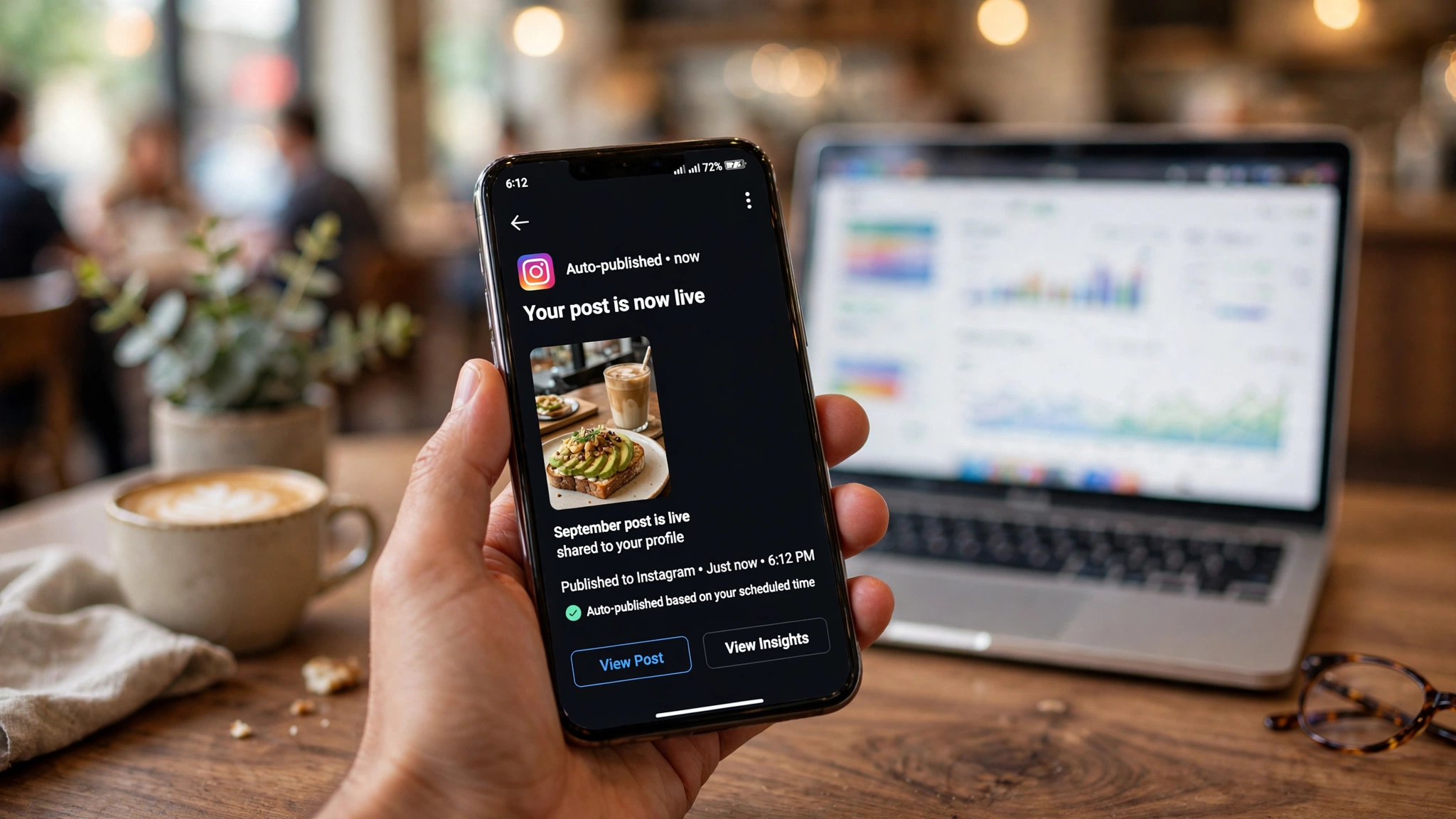
- Phase 4: Automated scheduling engine publishes at peak engagement hours.
3. Leverage Automated Evergreen Content Recycling
Social media algorithms show posts to less than 10% of a brand's total followers. A great educational post published in January will be entirely unseen by new followers who joined in June. Utilize evergreen recycling tools (like FeedHive's recurring slots) to re-queue top-performing educational posts every 60 to 90 days, updating the opening hook with AI while maximizing the lifespan of your best intellectual property.

Frequently Asked Questions (FAQ)
Does social media platform algorithms penalize posts scheduled via third-party AI tools?
No. Major platforms (Meta, LinkedIn, X, TikTok) maintain official, verified developer APIs specifically designed for third-party scheduling platforms. In-depth algorithmic studies demonstrate that reach is governed by audience engagement (watch time, comments, shares, saves), not whether a post was published via the native app or an authorized scheduling API.
Can AI social schedulers automatically reply to incoming comments and direct messages?
Yes. Enterprise platforms like Sprout Social and FeedHive include AI social inbox tools. The AI drafts context-aware responses to routine customer inquiries (such as business hours, pricing links, or support documentation), which community managers can approve with a single click.
How do client approval portals protect agencies from legal liabilities?
Client approval portals provide an immutable audit trail. When a corporate client approves a monthly social calendar inside the portal, their digital sign-off and timestamp are logged. If a client later objects to a published post, the agency possesses documented evidence of client authorization, protecting the agency against contractual disputes.
Can these tools schedule Instagram Stories and TikTok carousels directly without manual push notifications?
Yes. Modern official API integrations allow direct, automatic publishing of single images, multi-image carousels, Instagram Reels, and TikTok videos without requiring cumbersome mobile push notification reminders.
How does AI determine the "Best Time to Post" for each client?
AI schedulers analyze months of historical engagement metrics from your client's specific account. The algorithms identify when the client’s unique followers are actively liking, commenting, and scrolling, rather than relying on generic internet advice, ensuring posts drop at peak engagement windows.
Can an agency manage 20+ separate clients inside a single platform?
Yes. Platforms designed for agencies (such as Sprout Social, FeedHive, and Ocoya) feature strict workspace isolation. Each client account operates in its own sandboxed environment with separate social connections, dedicated brand voice settings, and isolated client access logins, ensuring data never crosses between competing brands.
Conclusion: Scaling Agency Operations Profitably in 2026
In modern digital marketing, content velocity and strategic consistency dictate brand success. Agencies that attempt to manage dozens of client accounts using manual drafting, fragmented spreadsheets, and clunky legacy queues will find their profit margins consumed by administrative labor.
By empowering creative teams with modern AI social media schedulers—leveraging automated social content repurposing, deploying AI post generator scheduling engines tailored to unique client brand voices, and utilizing streamlined client approval portals—forward-thinking agencies deliver superior content volume, higher audience engagement, and exceptional client retention while scaling their operations profitably throughout 2026.