

The short answer: Google’s Nano Banana 2.1, released October 6, 2026 and built on Gemini 3.6 Flash, cuts API image prices to roughly half at standard resolutions — $0.0336 per 1K image and $0.0504 per 2K image, down from $0.067 and $0.101 under Nano Banana 2. The nuance the headline skips: at 4K, the price drops from $0.151 to $0.113, about a quarter off, not half. Alongside the lower prices, Nano Banana 2.1 (API model ID gemini-nano-banana-2.1) improves visual quality, mask-based editing, text rendering, and character consistency across editing turns. It is available in the Gemini app, Google AI Studio, the Gemini API, Search AI Mode, Google Ads, Flow, Stitch, and the Gemini Enterprise Agent Platform. The older Nano Banana 2 is now deprecated, with Google’s changelog listing a shutdown date of October 29, 2026.
What Nano Banana 2.1 Is
Google released Nano Banana 2.1 on October 6, 2026, as an update to Nano Banana 2 (officially Gemini 3.1 Flash Image). It is built on Gemini 3.6 Flash and carries the API model ID gemini-nano-banana-2.1. Google’s model card describes it as a member of the Gemini 3 series of natively multimodal reasoning models: it accepts text and images as input across a context window of up to 1 million tokens, and it generates both image and text output.
The model is rolling out across the Gemini app, Google AI Studio, the Gemini API, AI Mode in Google Search, Google Ads, Google Flow, Google Stitch, and the Gemini Enterprise Agent Platform. In Search AI Mode, it is reachable through a banana icon under the search box, according to Search Engine Roundtable’s coverage of Google’s announcement.
The release did not arrive entirely out of the blue. In September, traces of a model labeled “Nano Banana 2.5 Flash” appeared in the Google Flow web build; on September 27 the label was changed to “Nano Banana 2.1,” and on October 5 the name briefly became selectable in Flow’s model picker before Google finalized the launch the next day. The downgrade from 2.5 to 2.1 was widely read as a signal that this is a refinement pass rather than a ground-up rebuild.
The headline: pricing
Google’s pricing page (updated October 7, 2026) lists Nano Banana 2.1’s paid-tier image output at $30 per million tokens, versus $60 per million for Nano Banana 2. That translates to concrete per-image prices:
| Resolution | Nano Banana 2 | Nano Banana 2.1 (standard) | Nano Banana 2.1 (batch) |
|---|---|---|---|
| 1K | $0.067 | $0.0336 | $0.0168 |
| 2K | $0.101 | $0.0504 | $0.0252 |
| 4K | $0.151 | $0.113 | $0.0567 |
The pattern matters more than the headline. At 1K and 2K, prices are cut by roughly 50%. At 4K, the drop is closer to 25%. For context, Nano Banana Pro — Google’s premium tier — still costs $0.134 per 1K image, so 2.1 now undercuts it by a wide margin at every resolution.
A few pricing facts developers should keep in mind:
- Batch API: halving again — $15 per million image tokens — for workloads that don’t need immediate responses.
- Input costs: $1.50 per million tokens for text, image, and video input. Text and thinking output costs $7.50 per million tokens. Complex prompts with heavy reasoning or large reference images raise the total beyond the per-image output figure.
- No free tier: Google’s pricing page lists no free-tier access for Nano Banana 2.1.
- Search grounding: grounding with Google web and image search includes 5,000 free requests per month shared across Gemini 3.x models, then $14 per 1,000 requests.
What Improved
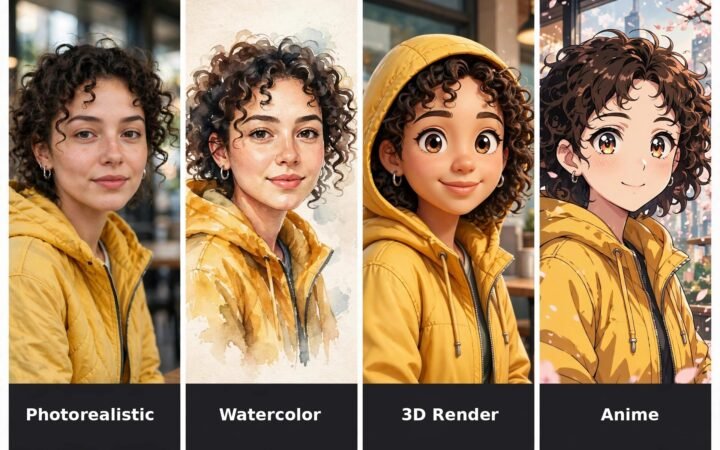
Google says Nano Banana 2.1 “outperforms our previous models across the board,” highlighting visual design, mask-based editing, and subject consistency. The more specific improvements, per Google’s developer documentation and model card:
- Visual quality and realism across 1K, 2K, and 4K output resolutions (default is 1K).
- Multi-image fusion: up to 14 reference images in a single prompt, with the model tracking up to four characters and ten objects for consistency across editing turns.
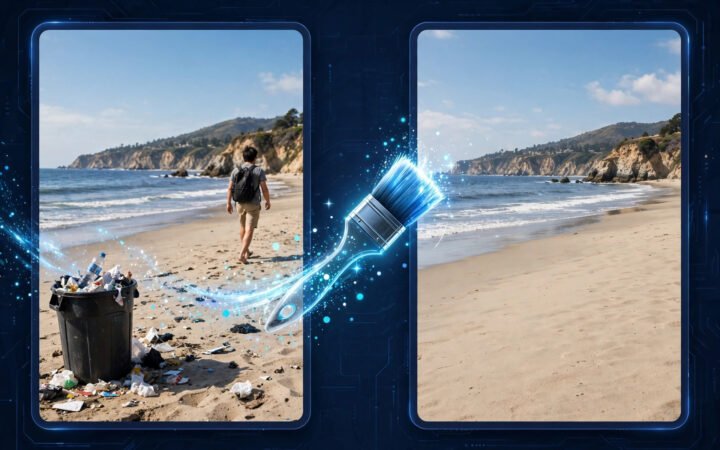
- Mask-based editing: change selected areas of an image while preserving surrounding details — useful for product shots, campaign revisions, and retouching workflows.
- Text rendering and infographic layout accuracy: better handling of posters, labels, and information graphics.
- Wide panoramas: fixed tiling artifacts on extreme aspect ratios (1:4, 4:1, 1:8, 8:1) at 2K and 4K.
- Search grounding: generations can draw on Google Search and Google Image Search for real-world information.
- Thinking levels: minimal, medium, and high settings give developers control over the trade-off between speed, prompt accuracy, and complex layouts.
Supported formats include PNG, JPEG, WebP, HEIC, and HEIF, with aspect ratios of 1:1, 3:2, 4:3, 16:9, 9:16, and 21:9. Images carry a SynthID watermark, and the model supports C2PA Content Credentials.
Google’s benchmark numbers
The model card reports evaluation through side-by-side human ratings (Elo scores), an automated factuality rater, and regression sets from earlier Gemini image models. Reported results, all attributed to Google:
- Text-to-image overall preference: 1050 ±14 Elo in Thinking configuration versus 990 ±7 for Nano Banana 2 (Thinking) and 935 ±8 for Nano Banana Pro.
- Infographic design: 1048 ±17 versus 961 ±12 (Nano Banana 2) and 912 ±12 (Pro).
- Infographic factuality: 0.521 versus 0.179 and 0.265.
- Multi-character consistency (editing): 1106 versus 978 for Nano Banana 2.
These are Google’s internal numbers, and the company does not describe the rater pool or full benchmark suite in public detail. On independent leaderboards, the picture is more mixed: on October 6, arena-style text-to-image and image-edit rankings showed Nano Banana 2.1 at preliminary scores of 1328 and 1428, behind GPT Image 2.5 Sunburst’s 1425 and 1524 on the same day. Independent rankings also note that Nano Banana Pro often still produces visibly better images in practice — particularly on color accuracy and proportions — with 2.1 positioned as the more efficient option rather than a replacement.
What Got Removed: The Migration Caveat
This is the part developers migrating production workloads need to read twice. According to coverage of Google’s official documentation, Nano Banana 2.1 removes several API features present in prior versions: function calling, structured outputs, caching, and Live API support.
That means some existing Nano Banana 2 integrations cannot migrate by simply swapping the model ID. If your pipeline depends on structured outputs to return JSON, or on function calling to chain tools, you’ll need to redesign that path before the October 29 shutdown. Google also notes that setting unsupported parameters (seed, topK, logprobs, temperature, topP) returns an API error.
For a US-focused audience running production workloads: budget time to benchmark 2.1’s output quality and consistency against your current setup before switching traffic. The lower per-image price is real, but a migration that breaks your tooling is not cheaper.
Known Limitations
Google’s own model card is candid about what 2.1 still does poorly:
- Poor rendering of small text and long paragraphs.
- Occasional hallucinations, slowness, or timeouts.
- Imperfect character consistency between input and generated images.
- Occasional confusion around spatial localization.
- Limited world knowledge, 3D reasoning, and factuality.
The knowledge cutoff for Gemini 3.6 Flash is March 2026, though Google notes that in some domains knowledge may be limited to January 2025. On safety, Google says the model met its child-safety launch thresholds and reached no Tracked or Critical Capability Levels in its frontier safety assessment.
The October 29 Deadline
Nano Banana 2 (gemini-3.1-flash-image) is now deprecated. Google’s changelog lists a shutdown date of October 29, 2026, leaving roughly three weeks from the 2.1 launch for developers to migrate endpoints and validate output quality. (One outlet noted it could not confirm the date in Google’s public documentation, so treat it as the reported date in Google’s changelog rather than a permanent guarantee — but plan for it.)
If you run image generation in production, the practical checklist is short: migrate the model ID, re-run your quality benchmarks, fix any integrations that relied on removed features, and compare real costs including input tokens and grounding before committing traffic.
Who Nano Banana 2.1 Makes Sense For
The pricing structure makes 2.1 most attractive to anyone generating images at volume: marketing teams producing ad variants, e-commerce sellers generating product illustrations, agencies running creative iteration loops, and developers building image features into apps. Batch pricing pushes the effective cost down further for non-urgent jobs — a 1K batch image costs about 1.7 cents.
To put the savings in concrete terms: a team generating 10,000 marketing images a month at 1K resolution would spend about $670 on Nano Banana 2 versus $336 on 2.1 at standard rates — or $168 on the batch tier. But the headline per-image price is only part of the bill. Heavy reasoning passes, large reference images, and search-grounded requests all add input-token charges, and Google’s $14-per-1,000-requests grounding fee kicks in after the 5,000-request monthly allowance. Model your actual workload cost, not just the output figure.
Casual users won’t see prices at all; in the Gemini app and Search AI Mode the model simply appears as the image engine behind the scenes. For them, the visible change is better edits, steadier characters across turns, and more legible text in posters and infographics.
Power users who relied on Nano Banana Pro for maximum realism should stay where they are — or at least test 2.1 against Pro before switching. And if you’re looking for genuinely free image generation rather than cheaper API rates, our roundup of free AI tools for image generation covers the zero-cost options.
Frequently Asked Questions
How much does Nano Banana 2.1 cost per image?
On the Gemini API standard tier: $0.0336 at 1K, $0.0504 at 2K, and $0.113 at 4K. Batch API halves those to $0.0168, $0.0252, and $0.0567. Input tokens cost $1.50 per million, and text/thinking output costs $7.50 per million, so complex requests cost more than the image-output figure alone.
Is there a free tier for Nano Banana 2.1?
No. Google’s pricing page lists no free-tier access for this model. You can use it inside the free Gemini app and Search AI Mode as a consumer, but API access is paid only.
Where can I use Nano Banana 2.1?
The Gemini app, Google AI Studio, the Gemini API, Search AI Mode, Google Ads, Google Flow, Google Stitch, and the Gemini Enterprise Agent Platform. The API model ID is gemini-nano-banana-2.1.
What is the default output resolution?
1K. You can request 2K or 4K through the API, and the model supports wide panoramic aspect ratios up to 8:1 at higher resolutions.
Is Nano Banana 2.1 better than Nano Banana Pro?
Google’s own benchmarks put 2.1 ahead of Pro on several metrics (text-to-image preference, infographic accuracy, multi-character consistency). But coverage of real-world testing notes that Pro often still produces visibly better images, especially for color accuracy and proportions. Pro remains the quality tier at $0.134 per 1K image; 2.1 is the efficiency tier.
When does Nano Banana 2 shut down?
Google’s changelog lists October 29, 2026 as the shutdown date for the deprecated Nano Banana 2 (gemini-3.1-flash-image). Developers should migrate to gemini-nano-banana-2.1 before then.
Does Nano Banana 2.1 watermark generated images?
Yes. Generated images carry Google’s SynthID watermark, and the model supports C2PA Content Credentials.
What was removed compared to Nano Banana 2?
Function calling, structured outputs, caching, and Live API support are no longer available on 2.1, so some existing integrations need redesign rather than a simple model swap.
Related guides: How to Use AI for Screenplay Writing: 7 Workflows for Screenwriters, How to Use AI for Graphic Design Projects: 8 Practical Workflows, How to Use AI for Photo Editing: 7 Workflows for Photographers.

Join the discussion
Have a question or a perspective to share?