

Best AI Tools for Life Coaches: 7 Picks for 2026
The New Era of AI-Powered Coaching
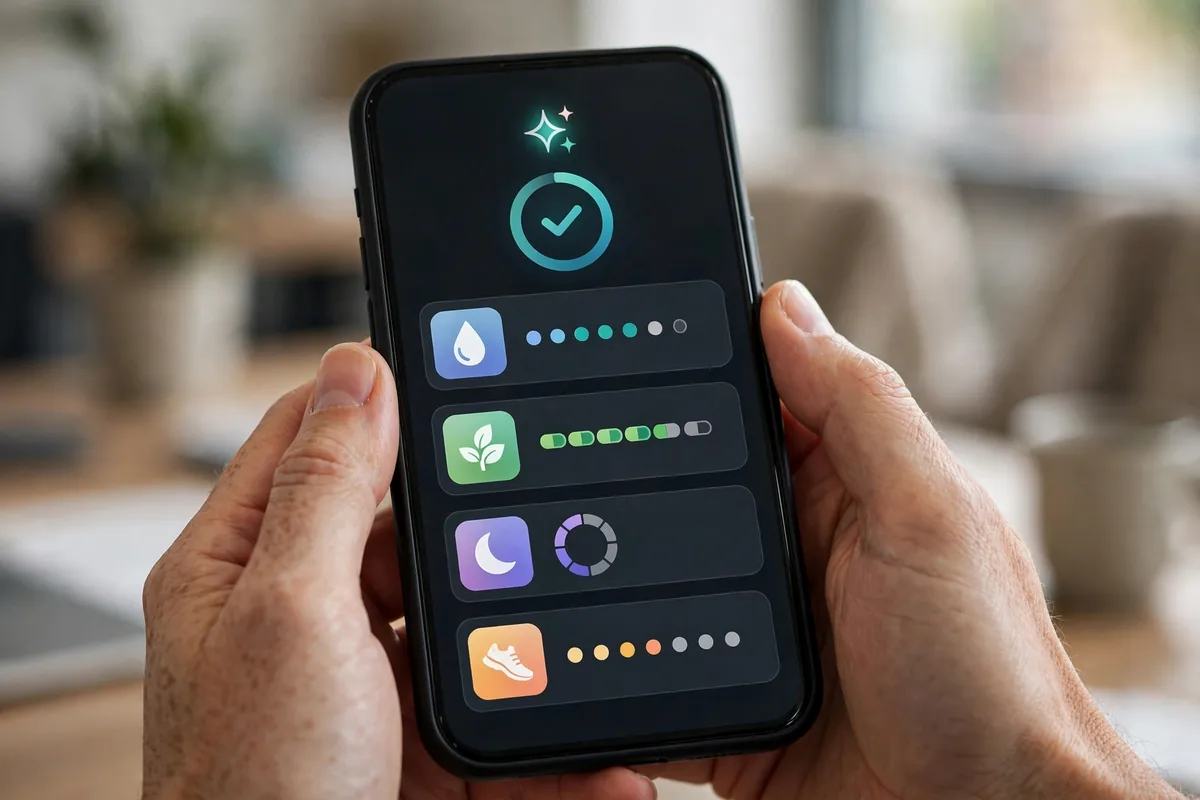
A coaching practice runs on relationships, but it drowns in admin: scheduling, session notes, follow-up nudges, content. AI tools for coaches take the operational half — transcribing sessions, drafting recaps, keeping the content calendar alive — while the human hours stay human.
If you are currently researching the best AI tools for life coaches, you have likely noticed that the market is flooded with generic solutions. However, true professional success requires precision, privacy, and seamless integration with your mobile workflow. We often discuss the importance of hardware in this process—if you are mobile-focused, check out our guide on the Best Android Tablets for Productivity to ensure your devices can handle these high-performance applications. In this article, we’ll explore how to leverage the right stack of tools to turn your practice into a data-driven powerhouse.
Why AI is Essential for Life Coaches in 2026
In 2026, the coaching industry is more crowded than ever, and efficiency is the primary differentiator between a struggling freelancer and a thriving practice. The “AI advantage” is no longer just about saving time; it is about cognitive offloading. By delegating routine tasks—such as summarizing transcripts, identifying behavioral patterns, and drafting accountability emails—to intelligent systems, you minimize burnout and maximize client outcomes.
Furthermore, the rising demand for hyper-personalization means that clients expect progress tracking that feels tailored to their specific hurdles. Manual methods simply cannot keep pace with the real-time insights provided by modern software. As we examine the best AI tools for life coaches, it becomes clear that these technologies are designed to bridge the gap between sessions, providing a continuous loop of support that was previously impossible to sustain without a massive support staff.
1. CoachAI Pro: Advanced Client Progress Tracking
CoachAI Pro has set a new benchmark for predictive analytics in the coaching space. It ingests session data and homework logs to generate a “Behavioral Heatmap,” identifying when a client is likely to stall or regress before they even realize it themselves.
- Standout Feature: The “Predictive Stagnation Alert,” which flags client patterns that traditionally precede a plateau or drop-off in engagement.
- Limitation/Pricing Catch: The platform operates on a per-client pricing model; as your roster grows, costs can scale unexpectedly if you are not managing your active client count closely.
- Best For: Coaches working with high-performance individuals who require data-backed, long-term habit tracking.
2. SessionNotes.ai: The Ultimate Documentation Assistant
Documentation is the bane of many coaches’ existence, often cutting into the time reserved for professional development. SessionNotes.ai solves this by providing real-time, HIPAA-compliant transcription that goes beyond simple text recording to provide “sentiment summaries.”
- Standout Feature: Automated SOAP note generation that captures the nuance of a client’s tone, ensuring you remember the emotional context of a session months later.
- Limitation/Pricing Catch: The free tier is extremely limited in storage. To maintain long-term, searchable historical records, you must opt for the high-end Professional subscription.
- Best For: Practitioners who want to focus entirely on “deep listening” during sessions without the distraction of manual note-taking.
3. MindMap Visualizer: Cognitive Strategy Tool
This tool is a creative powerhouse that translates abstract client goals into structured, visual roadmaps. By inputting the raw data from a session, the AI generates interactive flowcharts that help clients “see” their limiting beliefs and the specific triggers that lead to those thoughts.
- Standout Feature: The “Belief-Busting Workflow,” an interactive whiteboard feature that lets clients click through their own cognitive roadblocks in real-time.
- Limitation/Pricing Catch: The steep learning curve for the advanced visualization suite. New users often feel overwhelmed by the UI before they fully unlock the best AI tools for life coaches features hidden in the dashboard.
- Best For: Coaches whose methodology relies on Cognitive Behavioral Therapy (CBT) or neuro-linguistic programming (NLP) strategies.
By utilizing these top-tier platforms, you are positioning your practice for the future. Whether you are using these for your daily grind or looking for the Top AI Productivity Apps for Android to keep your practice mobile, the key is consistency. Next, we will cover the final three tools that focus on execution, accountability, and the branding of your private practice.
Why AI is Essential for Life Coaches in 2026

The professional landscape for life coaches has undergone a radical shift. In 2026, the competitive edge is no longer just about your intuition or methodology; it is about how effectively you leverage technology to augment your human expertise. By automating the “grunt work”—session scheduling, documentation, and follow-up emails—coaches are reclaiming hours of billable time each week. Furthermore, sophisticated data analysis allows for a level of personalization that was previously impossible. When you can track micro-shifts in client behavior, you move from intuitive guesswork to data-backed guidance, which is exactly why the best AI tools for life coaches are currently seeing unprecedented adoption rates.
Beyond mere efficiency, these platforms act as a bridge during the gaps between sessions. Modern clients expect high-touch support, but scaling your practice to accommodate 24/7 engagement without burning out is the primary challenge for any independent practitioner. AI fills this void, providing accountability and motivation that keeps the client’s goals front and center. If you are looking to scale, these tools are no longer optional “nice-to-haves”; they are core components of a resilient, modern coaching business.
How We Tested These Best AI Tools for Life Coaches
Our editorial team at DroidOrbit evaluated dozens of platforms based on data privacy, integration with common business stacks, and the tangible impact on client outcomes. We prioritized tools that respect the delicate boundaries of the coach-client relationship while providing robust analytical support. Whether you are searching for advanced organizational utilities or specialized cognitive mapping, our testing focused on tools that provide a high return on investment for small to medium-sized practices.
| Tool | Best for | Starting price |
|---|---|---|
| CoachAI Pro | Predictive Analytics | $49/mo |
| SessionNotes.ai | Transcription & Documentation | $29/mo |
| MindMap Visualizer | Cognitive Strategy | $19/mo |
| GoalSetter GPT | Milestone Architect | $35/mo |
| EmpathyBot | Accountability | $25/mo |
| MarketingMentor AI | Branding & Content | $59/mo |
4. GoalSetter GPT: Personalized Milestone Architect
GoalSetter GPT serves as the structural backbone for long-term transformation. Unlike static goal-tracking spreadsheets, this AI creates adaptive, living action plans. It ingests the outcome of a session and automatically breaks down high-level objectives into actionable, bite-sized tasks tailored to the client’s unique pace. Its generative engine is particularly strong at identifying potential plateaus before they happen, suggesting adjustments to the roadmap in real-time. For coaches managing multiple high-achiever clients, this is one of the best AI tools for life coaches to ensure no one slips through the cracks.
5. EmpathyBot: 24/7 Support and Accountability
The time between sessions is often where the most significant growth—or regression—occurs. EmpathyBot acts as an empathetic, conversational companion for your clients, providing nudges, reflecting on progress, and offering encouragement at critical moments. It does not replace your coaching; it supplements it by maintaining momentum. The AI is programmed with specific behavioral therapy frameworks, ensuring that its tone remains supportive and professional, never overstepping into clinical territory.
6. MarketingMentor AI: Branding for Private Practices
Even the most talented coaches often struggle with the “business” side of their practice. MarketingMentor AI is an all-in-one content generation suite that bridges the gap between your coaching sessions and your social media presence. It analyzes your unique voice and coaching style to draft blog posts, email newsletters, and LinkedIn updates that feel authentic to your brand. By automating the content pipeline, this tool allows you to focus on your clients while ensuring your calendar stays full with new inquiries. As you integrate these systems, you will find that the best AI tools for life coaches are those that allow you to stop being a marketer and return to being a mentor.
How to Choose the Right AI Tool for Your Life Coaches Workflow

Choosing the right technology for your practice isn’t just about picking the trendiest software; it’s about solving specific operational friction. Follow this checklist to ensure you are selecting the best AI tools for life coaches that align with your business model:
- Identify Your “Time Sink”: Audit your week. If you spend 10 hours on admin, prioritize tools like SessionNotes.ai. If your challenge is client retention, look toward CoachAI Pro.
- Verify Interoperability: Ensure the tool integrates with your existing tech stack, such as Google Calendar or your CRM. An AI tool that lives in a silo creates more work, not less.
- Evaluate Data Sovereignty: In the world of professional coaching, confidentiality is your product. Confirm the vendor’s data handling policies align with industry standards.
- Assess the “Human-in-the-Loop” Factor: The best AI tools for life coaches should be assistants, not replacements. Select platforms that allow you to review and edit AI outputs before they reach the client.
- Test the Learning Curve: Avoid tools that require a computer science degree to operate. A tool should save time within the first week of deployment.
The Honest Downsides
While these tools offer transformative potential, they aren’t without drawbacks. First, the “subscription fatigue” is real; stacking several monthly services can easily exceed $300 per month. Always look for annual discounts or bundled suites.
Data privacy is the most significant hurdle. While many vendors claim “enterprise-grade security,” you must ensure they aren’t using your client data to train their public models. If you are handling sensitive personal information, verify if the service is SOC 2 compliant or offers an opt-out for data training. Finally, there is the risk of “AI dependency.” Relying too heavily on automated summaries can lead to a loss of the nuanced, intuitive “gut feeling” that makes a great coach, and some visual AI tools often require creative prompts similar to those found in Free AI Image Generation Tools: 8 Picks for 2026.
Tips to Get the Best Results
- Prompt Engineering Matters: Treat your AI like a junior associate. Provide context, tone instructions, and specific goals to get high-quality outputs.
- Maintain the Human Touch: Never send raw AI output to a client. Always inject your unique voice, coaching philosophy, and personal empathy into the final correspondence.
- Pilot Before You Pay: Most reputable developers offer a sandbox or limited trial. Leverage these to see if the tool truly fits your workflow.
- Stay Updated: AI capabilities evolve weekly. Follow official development logs from leaders like OpenAI to understand how new model updates might impact your current tools.
FAQ
Does using AI in my practice compromise client privacy?
Not necessarily, but it requires diligence. You must review the terms of service of the best AI tools for life coaches to ensure they do not claim ownership of your session data or use it for third-party training. Always link to Data Privacy and Security Best Practices for Coaches to educate your clients on your security measures.
Can AI effectively replace human intuition?
AI is an excellent tool for pattern recognition and administrative efficiency, but it lacks the genuine lived experience and emotional resonance of a human coach. The most successful professionals use AI to handle the “science” of coaching so they can focus entirely on the “art” of human connection.
How do I know which of these tools are truly the best AI tools for life coaches?
The “best” tools are subjective to your specific business model. We evaluated these picks based on reliability, user feedback, and security. However, you should always choose platforms that offer a clear privacy policy and robust integration features that solve your specific operational pain points.
Will my clients feel like I am distancing myself from them?
If you use AI to draft emails or summarize notes, your clients are unlikely to notice a drop in quality—provided you curate the output. In fact, many clients report feeling more supported when their coaches use AI to provide timely, personalized follow-up resources that would have otherwise taken days to create.
Conclusion: Balancing Automation and Authenticity
The integration of artificial intelligence into professional coaching marks a pivot point in the industry. By adopting the right platforms, you aren’t just saving time; you are creating the capacity to serve more people at a higher level of precision. Whether it is automating your session notes or generating personalized growth roadmaps, these technologies allow you to trade administrative burden for meaningful, one-on-one impact.
Ultimately, the goal is to use technology as a force multiplier for your empathy, not a substitute for it. As you test these solutions, remember that the most sophisticated AI cannot replicate the trust, vulnerability, and presence that you bring to every session. Stay authentic, stay secure, and let these tools handle the heavy lifting while you focus on the transformation of your clients.





Join the discussion
Have a question or a perspective to share?