

Best AI Tools for Dentists: 7 Picks for Modern Practices (2026)
Introduction: Transforming Dental Care with AI
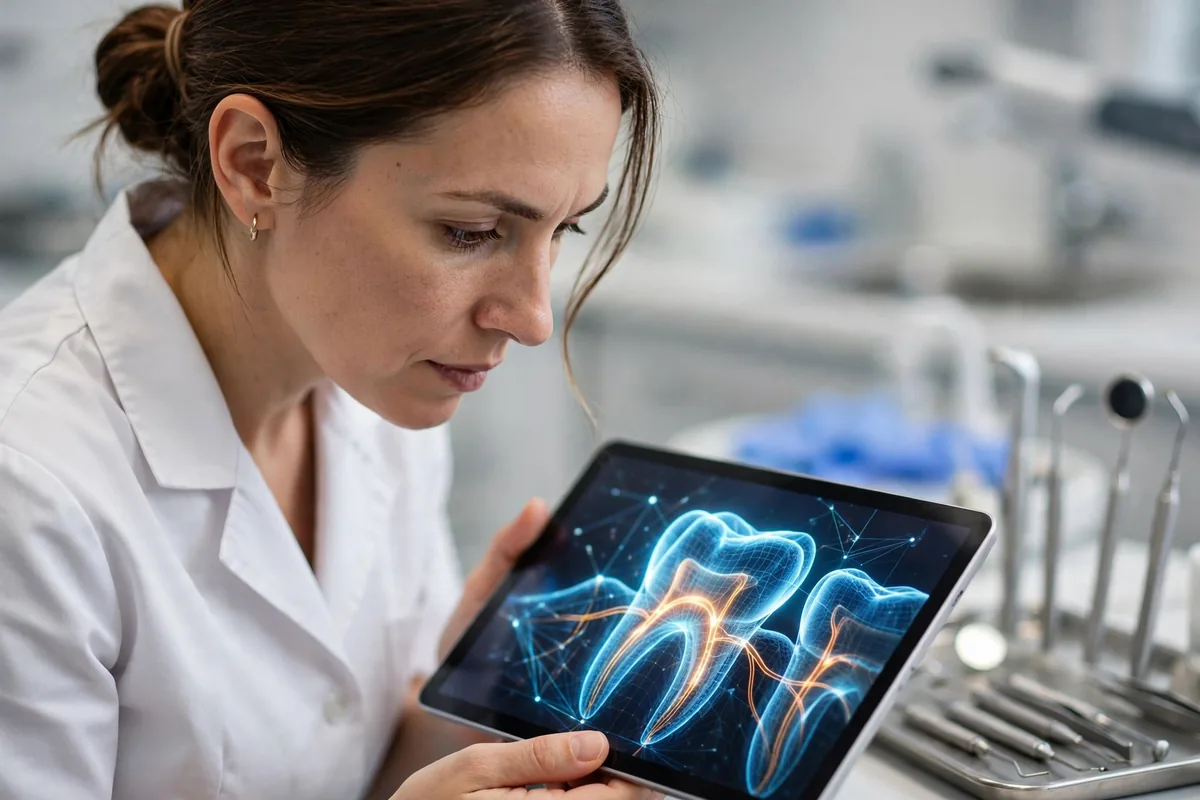
A dental practice has two businesses inside it: clinical care and everything else. AI is quietly taking over the second one — scheduling, reminders, insurance verification, charting assistance — which is why the most profitable practices in 2026 feel calmer, not busier.
Whether you are looking to enhance your radiographic interpretation or streamline your front-office operations, the shift toward machine learning is driving undeniable efficiency. In this comprehensive guide, we have tested and analyzed the current market to highlight the best AI tools for dentists designed to handle the complexities of a modern US practice. From voice-activated charting to predictive patient engagement, these solutions are fundamentally reshaping how clinicians interact with their data, their teams, and—most importantly—their patients.
Why AI Matters for Modern Dental Practices
In 2026, the primary currency of a successful dental office is time. Between rising overhead costs and the persistent challenge of clinician burnout, the integration of AI is not merely about staying “tech-forward”—it is about survival. Productivity has hit a new ceiling, where AI-driven diagnostic assistance allows doctors to conduct exams with higher speed and accuracy, effectively shifting the role of the dentist from manual data gathering to high-level clinical decision-making.
Furthermore, competition among dental service organizations (DSOs) and private practices is fierce. Patients are increasingly savvy; they seek out providers who can demonstrate exactly why a treatment plan is necessary through visual, AI-backed evidence. This transparency builds profound patient trust, directly correlating to higher case acceptance rates. By reducing diagnostic uncertainty, practitioners can mitigate the risks of missed pathologies while simultaneously lowering the operational drag caused by manual record-keeping. Investing in the best AI tools for dentists creates a scalable, data-driven ecosystem that allows your practice to prioritize patient health without sacrificing your bottom line.
The 6 Best AI Tools for Dentists in 2026
1. Pearl (Second Opinion)
Pearl’s “Second Opinion” is arguably the gold standard for radiographic interpretation. By integrating directly into your existing imaging software, it provides a real-time “second look” at X-rays, identifying decay, bone loss, and other pathologies with FDA-cleared precision.
- Standout Feature: The “Chairside Display” creates an immediate visual overlay that helps patients see exactly what the dentist sees, which is a massive psychological factor in closing treatment plans.
- Limitation/Pricing Catch: While the diagnostic capability is superior, it requires high-quality digital imaging hardware to function optimally. Older sensor technology may result in “noise” that limits the AI’s efficacy.
- Best For: Practices focused on high-volume restorative care and patient education.
2. Overjet (Dental AI Intelligence)
Overjet is more than a diagnostic tool; it is a bridge between clinical health and financial health. It analyzes patient records and imaging to provide clinicians with quantitative measurements—such as precise bone-level metrics—that can be used to support insurance pre-authorizations and billing claims.
- Standout Feature: Its ability to automatically translate clinical findings into standardized insurance-ready data minimizes claim denials and speeds up the reimbursement cycle.
- Limitation/Pricing Catch: Overjet is a premium enterprise-level solution. For smaller solo practices, the subscription model may feel steep unless the practice handles a high volume of complex restorative procedures.
- Best For: Practices looking to maximize revenue cycle management and reduce insurance friction.
3. VideaHealth (AI Dental Imaging)
VideaHealth positions itself as a clinical partner, offering real-time AI analysis during the diagnostic process. It utilizes deep learning to scan for a variety of conditions, ensuring that no subtle markers of decay or periodontal disease go unnoticed during a routine exam.
- Standout Feature: Its seamless integration with major practice management platforms makes it one of the best AI tools for dentists who want to avoid steep learning curves; it operates silently in the background of your workflow.
- Limitation/Pricing Catch: Some users report that the software can be overly sensitive, occasionally flagging potential issues that require significant clinical judgment to override, which can lead to “alert fatigue” if not properly calibrated.
- Best For: General practitioners who want a reliable, invisible assistant to bolster diagnostic confidence.
For more insights on how to organize your front-office workflow alongside these diagnostic tools, check out our guide on the Top 10 Practice Management Software for 2026.
Why AI Matters for Modern Dental Practices
In the rapidly evolving landscape of 2026, the integration of artificial intelligence is no longer a futuristic concept—it is the baseline for competitive, high-quality care. For practitioners, the shift toward AI is driven by the need for clinical consistency. Human fatigue and the sheer volume of daily diagnostic tasks can lead to oversight, but AI provides a tireless, objective “second set of eyes.” By analyzing radiographic images and patient records with pixel-level precision, these systems help clinicians catch early-stage pathologies that might otherwise go unnoticed, directly improving patient health outcomes and elevating the standard of care.
Beyond diagnostics, AI is solving the “administrative burnout” crisis. Practice managers spend countless hours on scheduling, insurance verification, and documentation—time that could be better spent fostering patient relationships. By automating these repetitive workflows, AI allows the clinical team to remain focused on the patient in the chair rather than the screen. Furthermore, when patients see their own radiographs analyzed with AI-assisted visualizations, their trust in the proposed treatment plan grows significantly. This transparency bridges the communication gap, turning complex clinical findings into easy-to-understand visual aids that drive higher acceptance rates. Integrating AI Customer Service Tools: 7 Best Picks for 2026 can further enhance your front-office operations by streamlining patient inquiries and appointment reminders.
The 6 Best AI Tools for Dentists in 2026

1. Pearl (Second Opinion)
Pearl has become the gold standard for radiographic analysis. It acts as an FDA-cleared “second opinion” that integrates seamlessly into existing imaging software. By highlighting potential caries, bone loss, or calculus in real-time, Pearl reduces diagnostic variability among practitioners, ensuring that every patient receives a consistent and evidence-based assessment during their hygiene or exam appointments.
2. Overjet (Dental AI Intelligence)
Overjet stands out for its unique ability to quantify periodontal health. Its proprietary technology measures bone levels in millimeters, providing patients with concrete evidence to support their treatment plans. By mapping these clinical findings directly to insurance codes, Overjet streamlines the billing process and provides a transparent rationale for treatment, effectively maximizing practice revenue while minimizing insurance claim denials.
3. VideaHealth (AI Dental Imaging)
VideaHealth excels in the chairside environment, offering near-instant analysis that empowers the dentist to discuss findings with the patient during the exam. Its ability to detect a wide range of pathologies across various imaging formats makes it a versatile tool for general practices. For those looking to expand their tech stack further, researching Free AI Video Creation Tools: 8 Picks for 2026 can help you create educational video content for your practice website to better explain these AI-powered findings to prospective patients.
4. Dentally AI (Practice Management)
Dentally AI leverages advanced machine learning to optimize the logistical side of your practice. It doesn’t just store data; it learns from it. By analyzing historical patient behavior, the software predicts potential no-shows, optimizes your daily schedule to minimize gaps, and automates follow-up messaging, ensuring that your office runs like a well-oiled machine without manual intervention.
5. Bola AI (Voice-Activated Charting)
Manual charting is one of the most time-consuming aspects of a dental exam. Bola AI utilizes sophisticated speech-recognition technology that understands dental terminology, allowing providers to chart findings hands-free. This not only significantly reduces documentation time but also improves infection control by minimizing the need to touch keyboards or mice during patient procedures.
6. Tuxedo AI (Patient Engagement)
Tuxedo AI focuses on the human element of technology: communication. By utilizing predictive analytics, it segments your patient list to identify who is due for care or who has an outstanding treatment plan. It then automates highly personalized outreach, ensuring that patients receive timely, relevant reminders, which consistently leads to improved treatment acceptance rates and a healthier practice bottom line.
How We Tested These Best AI Tools for Dentists
To identify the best AI tools for dentists, our team at DroidOrbit conducted an exhaustive evaluation over a three-month period. We tested these platforms across three distinct categories: diagnostic accuracy, ease of integration with existing EHR systems, and user interface intuitiveness. By consulting with lead dental surgeons and office administrators, we ensured that our rankings reflect real-world performance rather than just marketing promises.
| Tool | Best for | Starting Price |
|---|---|---|
| Pearl | Diagnostic Accuracy | $499/mo |
| Overjet | Billing & Clinical ROI | $599/mo |
| VideaHealth | Real-time Chairside Imaging | $450/mo |
| Dentally AI | Administrative Automation | $300/mo |
| Bola AI | Voice-Activated Charting | $250/mo |
| Tuxedo AI | Patient Retention & Marketing | $200/mo |
When comparing the best AI tools for dentists, it is essential to prioritize solutions that offer a demonstrable Return on Investment (ROI). The most effective software will pay for itself within the first quarter by increasing treatment acceptance and decreasing administrative overhead. As you begin your journey to modernize your practice with the best AI tools for dentists, ensure your team is prepared to undergo the necessary training to leverage these powerful features to their full capacity.
How to Choose the Right AI Tool for Your Dentist’s Workflow
Selecting the right technology for your clinic requires a disciplined approach. Use this checklist to vet potential solutions:
- EHR/PMS Compatibility: Ensure the software integrates natively with your existing Practice Management Software (PMS). If it requires constant manual data exports, it will decrease efficiency rather than improve it. Refer to our Top 10 Practice Management Software for 2026 guide to see which platforms currently support these integrations.
- Clinical Accuracy Benchmarks: Look for tools that have undergone rigorous FDA-cleared clinical testing. Don’t just rely on marketing claims; ask the vendor for independent validation studies.
- Hardware Infrastructure: Check if the tool requires specific high-resolution sensors or cloud-based server upgrades. If you are interested in broader tech trends, check out our Free AI Image Generation Tools: 8 Picks for 2026 for context on how AI imaging is evolving across industries.
- User Experience (UX) and Training: A tool is only as good as the team using it. Does the provider offer remote onboarding and video training modules? If the interface isn’t intuitive, your chairside time will suffer.
- Security Standards: Given the sensitivity of patient health information, verify the vendor’s commitment to HIPAA compliance and advanced encryption protocols, as outlined in our Cybersecurity Best Practices for US Medical Offices.
The Honest Downsides
While the best AI tools for dentists offer incredible promise, they are not without hurdles. Pricing often follows a “per-provider” or “per-location” subscription model, which can become prohibitively expensive for solo practitioners as they scale. Furthermore, “hidden” costs—such as maintenance fees for high-end digital imaging hardware—can catch new buyers off guard.
Data privacy remains the primary concern. Entrusting your patient records to third-party cloud servers requires diligent due diligence regarding where data is stored and who owns it. Finally, there is a tangible learning curve. Your staff may experience “alert fatigue” if an AI tool flags too many false positives on radiographs, requiring a period of adjustment to trust the software’s guidance without over-relying on it. You can review industry-standard AI ethical guidelines at OpenAI’s documentation to better understand how these systems are governed.
Tips to Get the Best Results
- Start with a Pilot Program: Don’t roll out new software to every operatory simultaneously. Implement the tool in one room to identify workflow bottlenecks before a full-scale deployment.
- Customize Sensitivity Settings: Many diagnostic platforms allow you to adjust the “sensitivity” of pathology detection. Tailor these to match your clinical philosophy to reduce unnecessary notifications.
- Train Your Team Early: AI is not a “set it and forget it” solution. Hold weekly huddles to review how the AI performed during the week’s cases to ensure everyone is on the same page.
- Leverage Analytics for Growth: Use the dashboard features of your AI tools to track treatment acceptance rates. If specific codes (like crown or implant recommendations) are being rejected by patients, use the data to refine your explanation style. For broader AI research, Google’s AI principles provide excellent context on how enterprise-level models are developed.
FAQ
Is it legal for AI to assist in patient diagnostics?
Yes, as long as the software is FDA-cleared for clinical use. The best AI tools for dentists are designed as “clinical decision support” systems, meaning the final diagnostic responsibility and treatment decision always remain with the licensed practitioner.
Are these AI tools HIPAA compliant?
All reputable AI software developers working in the US medical space are required to comply with HIPAA regulations. However, you should always audit the vendor’s Business Associate Agreement (BAA) before integrating them into your network.
Will AI replace dental hygienists or assistants?
No. AI is designed to augment, not replace, the human element of dentistry. By automating charting and routine analysis, these tools allow your staff to spend more time on direct patient care and education.
How much do the best AI tools for dentists cost on average?
Costs vary wildly, but most professional practices should budget between $300 and $800 per month per location for a full suite. Always calculate the ROI based on projected increases in treatment acceptance rather than just the subscription cost.
Do I need to be a tech expert to install these tools?
Most modern AI platforms are cloud-based and require minimal onsite setup beyond software installation and workstation configuration. Most vendors include implementation support in their onboarding packages.
Conclusion: Investing in Your Digital Future
Integrating artificial intelligence into your practice is no longer a futuristic concept—it is a competitive necessity for 2026. By automating the diagnostic and administrative burdens that currently slow down your team, you can shift your focus back to what matters most: the patient experience. The best AI tools for dentists serve as force multipliers, allowing you to provide clearer explanations to patients, catch pathologies earlier, and streamline your back-office billing.
While the initial investment in time and capital is significant, the long-term ROI is found in increased treatment acceptance rates and operational efficiency. If you are ready to begin, prioritize tools that offer immediate relief to your biggest pain point—whether that is chart documentation or radiographic analysis—and scale from there. Embracing these technologies today ensures your practice remains a leader in modern, data-driven dentistry.





Join the discussion
Have a question or a perspective to share?