
AI Fitness Coach Apps: Training Plans That Adapt (2026)
A personal trainer is one of the most effective fitness investments you can make — and one of the most expensive. AI fitness coach apps aim to close that gap: they build personalized training plans, adjust workouts based on your progress and feedback, and keep you accountable, all for a fraction of the cost of in-person coaching. In 2026, these apps have matured from simple workout generators into adaptive systems that respond to how your body is actually performing.
This guide explains how AI fitness coaching works, walks you through getting started safely, compares the main types of apps, and covers the honest limitations — including when you still need a human professional.
How AI Fitness Coach Apps Work
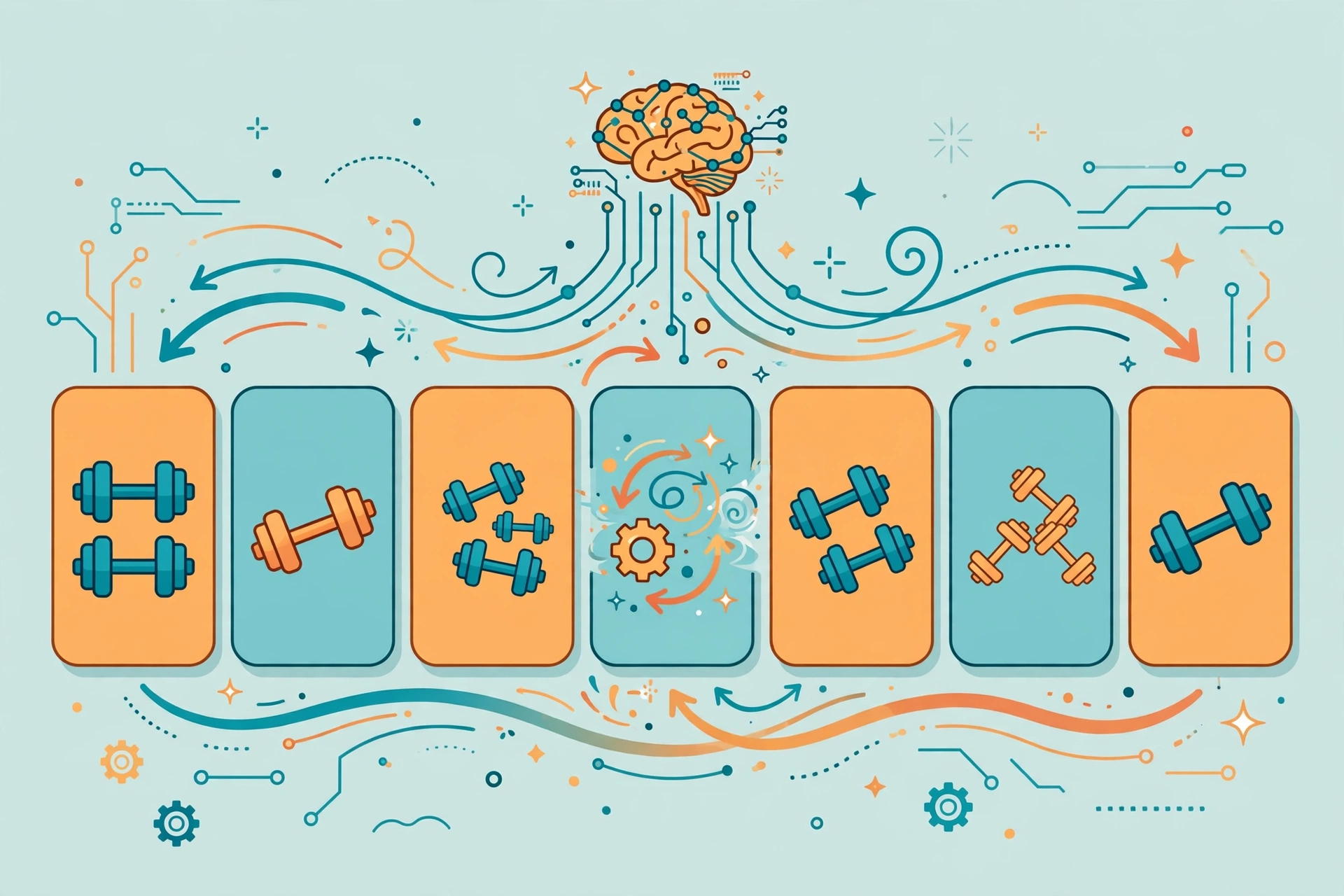
At a high level, these apps follow a loop: assess → plan → track → adapt. You start by entering your goals, experience level, available equipment, schedule, and any limitations. The app generates a training plan — exercises, sets, reps, and progression scheme. As you log workouts (or the app reads data from your phone or wearable), it adjusts: increasing weights when you are progressing, backing off when you report excessive soreness or miss sessions, and swapping exercises when equipment is unavailable.
The “AI” part is the adaptation engine. Early fitness apps gave everyone the same static PDF-style program. Modern AI fitness coach apps use your logged performance to make decisions a coach would make: add volume here, deload there, change the exercise selection when you plateau. The quality of the adaptation depends heavily on the quality of your logging — the app can only adapt to data it receives.
What the apps typically track
- Workout performance: exercises, weights, reps, and sets completed versus planned.
- Subjective feedback: perceived effort, soreness, energy levels, and sleep quality.
- Body metrics: weight, measurements, and progress photos over time.
- Consistency: adherence to the schedule — the metric that matters most for results.
- Wearable data: heart rate, activity, and recovery signals when connected to a fitness watch or tracker.
Getting Started: A Step-by-Step Setup

Follow these steps to get a genuinely useful plan out of any AI fitness coach app, rather than a generic template.
Step 1: Define one primary goal
Pick the single outcome that matters most right now: build strength, lose fat, gain muscle, improve conditioning, or learn a skill like a pull-up. Apps program very differently for “get stronger” versus “run a faster 5K.” You can change goals later, but starting with one keeps the plan coherent.
Step 2: Be honest about your starting point
Enter your real experience level, not the one you wish you had. Overstating your level produces plans that are too aggressive and lead to burnout or injury; understating wastes time on work that is too easy. If you are returning after a long break, say so — good apps have re-entry protocols.
Step 3: Specify your real constraints
List your actual available days per week, session length, equipment (full gym, dumbbells at home, bodyweight only), and any injuries or limitations. The best plan is the one you can actually execute consistently. An ambitious five-day program you abandon beats nothing — a realistic three-day plan you follow wins.
Step 4: Review the generated plan critically
Before starting, read the whole first week. Does the exercise selection make sense for your equipment? Is the volume reasonable for your level? Do the session lengths fit your schedule? Adjust anything that looks wrong now — it is much easier than fixing it mid-program.
Step 5: Log every workout honestly
This is the step people skip, and it is the entire point. Log what you actually did — including the sets you cut short and the workouts you missed. The adaptation engine needs truthful data; logging an idealized version of your training produces a plan for a fictional person.
Step 6: Give feedback when prompted
Rate your sessions: how hard they felt, how sore you are, how your energy is. This subjective data is what lets the app distinguish “progressing well” from “quietly overreaching.” Two minutes of feedback after a workout meaningfully improves the next week’s plan.
Step 7: Review progress monthly and adjust goals
Once a month, look at the trend: are your lifts going up, measurements moving, consistency holding? If progress has stalled for several weeks despite good adherence, that is the signal to change the goal, the program emphasis, or to consult a human coach for a form check.
AI Fitness Coach Apps Compared
The market splits into a few distinct approaches. The right choice depends on where you train and what kind of guidance you want.
| App type | Best for | Typical cost | Strengths | Limitations |
|---|---|---|---|---|
| Adaptive strength apps | Gym-goers focused on lifting | Free tier + monthly subscription | Detailed progression, exercise libraries, plate calculators | Requires honest logging; gym-focused |
| AI personal trainer apps | Beginners wanting full guidance | Monthly subscription | Onboarding assessments, video demos, habit coaching | Less depth for advanced lifters |
| Wearable-integrated coaches | Data lovers with a fitness watch | Often bundled with device or subscription | Recovery and readiness scores, automatic activity import | Locked to an ecosystem; running/cycling bias |
| Conversational AI coaches | Flexible, chat-based planning | Free to low-cost | Highly customizable, answers questions | No structured progression; easy to get vague plans |
| Human + AI hybrid coaching | People who want a real coach affordably | Mid-range monthly fee | Human oversight with AI efficiency | More expensive than pure AI; coach quality varies |
A practical note on cost: most dedicated AI fitness coach apps run on subscriptions, with free tiers that let you test the core experience. Before paying, use the free period to complete at least two full weeks — that is enough to judge whether the plan quality and the app’s interface fit your training style.
What Adaptive Training Plans Actually Adapt To
“Adaptive” is the industry’s favorite word, so it is worth asking what is actually changing under the hood. In well-built apps, the plan adjusts along several dimensions:
- Load progression: weights and reps increase when you complete sessions as prescribed, following the app’s progression model.
- Volume management: total weekly work rises during productive phases and drops during deload weeks or when fatigue markers climb.
- Exercise substitution: movements you consistently struggle with or lack equipment for get replaced with appropriate alternatives.
- Schedule flexibility: missed sessions trigger plan reshuffling rather than a guilt trip — the week reorganizes around what you can still do.
- Goal pivots: when you change goals or hit a milestone, the program emphasis shifts instead of starting you from zero.
What they generally do not adapt to: your movement quality. An app cannot see that your squat depth collapsed or your back rounded on the last set. That visual, real-time feedback remains the domain of human coaches, training partners, or at minimum filming yourself and comparing against the app’s demo videos.
Nutrition and Recovery Features: Useful but Limited

Many AI fitness coach apps bundle nutrition guidance — calorie targets, macro splits, meal logging, sometimes photo-based food estimates. These features are genuinely useful for building awareness of what you eat. Treat the numbers as estimates rather than precise measurements: even the best food logging has meaningful error margins, and consistency of tracking matters more than any single day’s accuracy.
Recovery features — sleep tracking, readiness scores, soreness check-ins — help the app modulate training stress. Pay attention to these signals, but do not outsource your judgment entirely. If the app says you are ready to train hard and your body disagrees, listen to your body. The app has data; you have the lived experience.
Safety: When to Choose a Human Professional Instead
AI coaching is a powerful tool with clear boundaries. Seek qualified human guidance — a certified trainer, physical therapist, or your doctor — in these situations:
- You have a current injury, chronic pain, or a medical condition (heart issues, diabetes, pregnancy, post-surgery recovery).
- You are new to resistance training and unsure about exercise form — a few in-person sessions to learn the fundamental movements pays dividends forever.
- You experience sharp pain, dizziness, or chest discomfort during training — stop and get evaluated rather than pushing through.
- You have a history of disordered eating — app-based calorie and macro tracking can be counterproductive; work with a professional instead.
- You are training for a specific competitive event where technique details determine both performance and safety.
A popular compromise: use the AI app for programming and a human coach for periodic form checks — say, one session every month or two. You get the best of both at a fraction of full-time coaching cost.
Staying Consistent: The Real Challenge
The dirty secret of fitness apps is that the plan is rarely the problem — adherence is. The fanciest adaptive algorithm in the world cannot help if you stop opening the app in week three. A few evidence-aligned tactics that work regardless of which app you choose:
- Shrink the commitment: a 30-minute session you do beats a 90-minute session you skip. Set the app to your honest minimum, not your aspirational maximum.
- Anchor workouts to existing routines: train right after work, before your shower, on the way home — attached to something you already do.
- Track streaks, not perfection: aim for consistency over weeks, and treat a missed session as data (the app will adapt) rather than failure.
- Review progress visually: monthly progress photos and strength trends are more motivating than daily scale fluctuations.
- Use the app’s reminders intentionally: one well-timed nudge helps; ten notifications a day trains you to ignore them all.
Frequently Asked Questions
Are AI fitness coach apps as good as a personal trainer?
For programming — designing progressive, well-structured training plans — good AI fitness coach apps are genuinely competitive with an average trainer, and far better than a random internet program. For everything a trainer does in person — correcting form in real time, reading your energy, adapting mid-session, keeping you accountable face-to-face — AI cannot match a good human coach. Most people get the best value using AI for the plan and a human for periodic check-ins.
Do I need a gym to use an AI fitness coach app?
No. Most apps let you specify your equipment, including bodyweight-only or minimal home setups like dumbbells or resistance bands. Be specific during onboarding — “dumbbells up to 25 lbs and a bench” produces a much better plan than a vague “home workout” setting. If your equipment changes, update the app so the plan updates too.
How much do AI fitness coach apps cost?
Most operate on monthly or annual subscriptions, with free tiers or trials that let you test the experience first. Annual plans are typically much cheaper per month than monthly billing. Compared to in-person training — which often costs more per session than an entire year of an app — even paid tiers are inexpensive. Start with the free tier and upgrade only after two consistent weeks.
Can AI fitness apps help with weight loss?
They can support it through structured training plans and nutrition awareness features, which are two important pieces of the puzzle. But sustainable fat loss depends mostly on nutrition consistency, sleep, and daily activity — areas where the app can guide but not do the work. Be cautious of any app promising rapid results; steady progress of roughly 0.5–1% of body weight per week is the sustainable range most professionals target.
Is my fitness data private?
Fitness apps collect health-adjacent data — workouts, body metrics, sometimes location — so check the privacy policy before committing. Look for clear statements about data sharing with advertisers and whether you can delete your data. Prefer apps that keep analytics anonymized and let you export or erase your history. As a rule, avoid apps that cannot explain their data practices plainly.
What if I stop progressing on an AI-generated plan?
First, check adherence: the plan only works if you follow it, log honestly, sleep enough, and eat adequately. If adherence is solid and progress has stalled for three to four weeks, try changing the training emphasis within the app, take a deload week, or get a human coach to review your form and programming. Plateaus are normal; the response is to change a variable, not to quit.
Your First Month, Summarized
Week one: set up honestly, review the plan, and focus on learning the logging habit. Weeks two and three: train consistently, give feedback after sessions, and let the app’s first adaptations arrive. Week four: review your progress trends and decide — is this app earning its place in your routine? If yes, commit to the subscription and keep going; the compounding effect of consistent, progressively overloaded training is where the real transformation happens. The app is the coach’s whistle and clipboard. You are still the athlete.





Join the discussion
Have a question or a perspective to share?