
Dreame Is Making Smartphones Now — And One of Them Is Modular
Dreame, the Chinese manufacturer best known for robot vacuums, has announced that it is making smartphones. The company showed off two phones at its own Next event in California this week, and while neither phone has actually launched yet — not in China, the United States, or anywhere else — the announcement is one of the most surprising moves in the smartphone industry this year. A vacuum company entering the phone market would be a curiosity on its own. The fact that one of its first phones is modular, with a magnetic attachment point where the rear camera would normally be, makes it a genuinely interesting story.
The two phones are the Dreame Aurora Nex and the Dreame Aurora Lux. Both were previously revealed in China in March 2026, and the California event was their introduction to a Western audience. Dreame has revealed only a handful of specifications for either phone, and it has not confirmed when or where either will launch. What it has described is a vision: phones running its own Aurora AIOS operating system, which the company calls a proprietary system “designed around proactive service rather than passive response.” In plain language, that is an Android skin with a heavy layer of AI on top.
This article explains what Dreame has actually shown, what the modular Aurora Nex is and is not, what Aurora AIOS promises, and whether a vacuum company has any realistic chance in the hardest market in consumer electronics.
The Aurora Nex LS1: A Modular Phone With a Magnetic Camera Mount
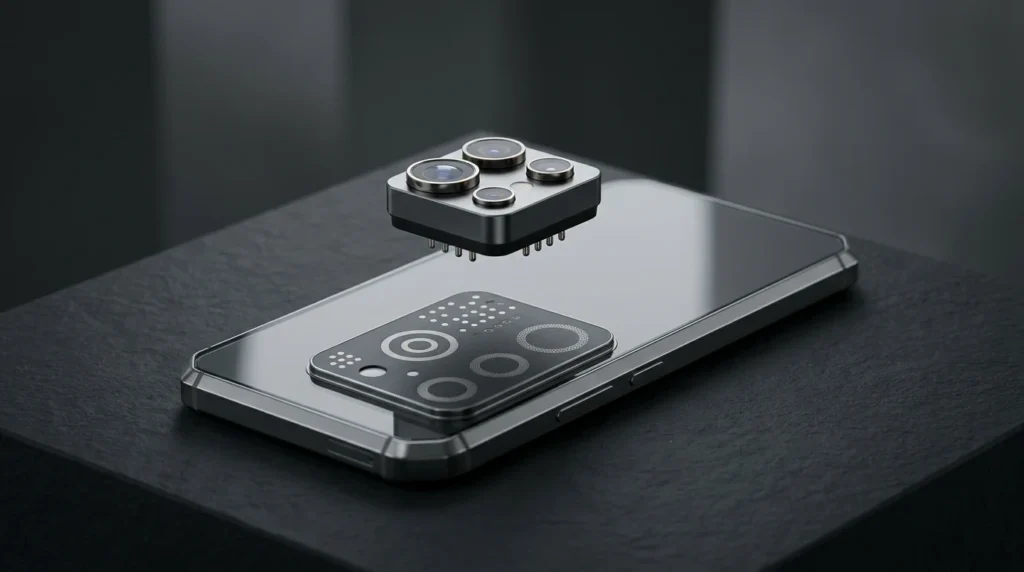
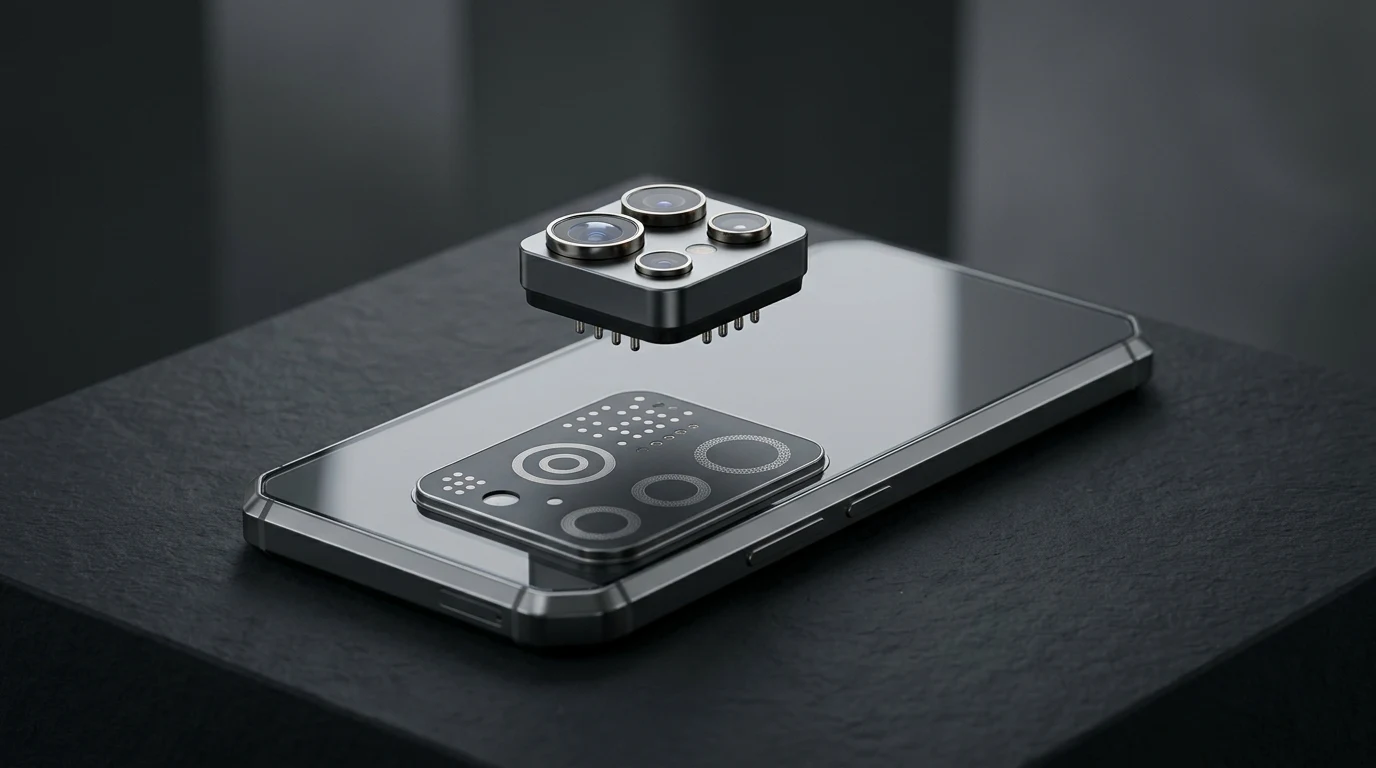
The more interesting of the two phones is the Aurora Nex LS1, and it is also the less plausible. It is a modular smartphone with a magnetic attachment point where the rear camera would normally sit. The idea is that camera modules — and potentially other accessories — can be magnetically attached to the back of the phone, swapping in different photographic capabilities instead of relying on the fixed set of lenses built into a conventional phone.
Modular phones have a long and mostly unhappy history. Google’s Project Ara promised a fully modular phone and was cancelled before launch. Motorola’s Moto Mods, magnetic accessories that snapped onto the back of Moto Z phones, won genuine fans but never became a mass-market success, and Motorola quietly abandoned them. LG’s G5 tried a modular bottom slot and it failed. Essential’s magnetic accessory system died with the company. The pattern is consistent: modular phones excite enthusiasts and reviewers, but mainstream buyers prefer a phone that simply works, and accessory ecosystems rarely reach the scale that makes them worth a manufacturer’s investment.
That history is the lens through which the Aurora Nex LS1 should be viewed. A magnetic camera mount is a clever idea, and for photography enthusiasts it could be genuinely appealing: a larger sensor module for low light, a telephoto module for zoom, a wide module for landscapes, all swappable on one phone body. But the idea only works if Dreame builds or attracts a real range of modules, prices them sensibly, and supports them for years. None of that has been demonstrated yet, and Dreame has shown the phone without launching it, which means the modular system exists today as a concept rather than a product.
There are also practical questions a magnetic camera mount raises. A magnet strong enough to hold a camera module securely must not interfere with the phone’s other functions, and a module that protrudes from the back of the phone changes how the device sits in a pocket and on a table. Weather sealing becomes harder when part of the phone is detachable. These are engineering problems with known solutions, but they add cost and complexity, and they are exactly the kind of detail that determines whether a modular phone is usable every day or merely impressive on a stage.
The Aurora Lux: A Phone That Is More Than One Phone
Dreame’s second phone is the Aurora Lux, though calling it a single phone is a little misleading. Dreame has presented the Lux as a range rather than a single device, with more than one configuration under the same name. The company has not published a full specification sheet, and the details that have emerged describe a premium device rather than a budget one, consistent with Dreame’s positioning of the Aurora line as a flagship effort rather than a cheap experiment.
The Lux matters because it shows that Dreame is not betting everything on modularity. The Nex is the attention-grabbing concept; the Lux is the phone that has to sell. If Dreame wants to be taken seriously as a phone maker, the Lux needs to compete on the fundamentals — display quality, camera performance, battery life, and software — with established brands that have spent a decade refining those things. A vacuum company with no phone track record faces a steep climb on every one of them.
Aurora AIOS: Proactive AI Instead of Passive Response
Both phones will run Dreame’s own Aurora AIOS, which the company describes as a proprietary operating system “designed around proactive service rather than passive response.” That phrase is worth translating. A conventional phone waits for you to open an app and ask for something. A proactive system is supposed to anticipate what you need — surfacing the right information before you ask, automating routine tasks, and managing the device on your behalf.
In practice, Aurora AIOS is an Android skin with a heavy layer of AI features. That is not a criticism: nearly every Android manufacturer now ships an AI layer, from Samsung’s Galaxy AI to Motorola’s Moto AI and the Gemini Intelligence features rolling out to phones like the Motorola Signature 27. The question is not whether Dreame can add AI features, but whether its AI is better than the alternatives, and whether it is integrated deeply enough to matter.
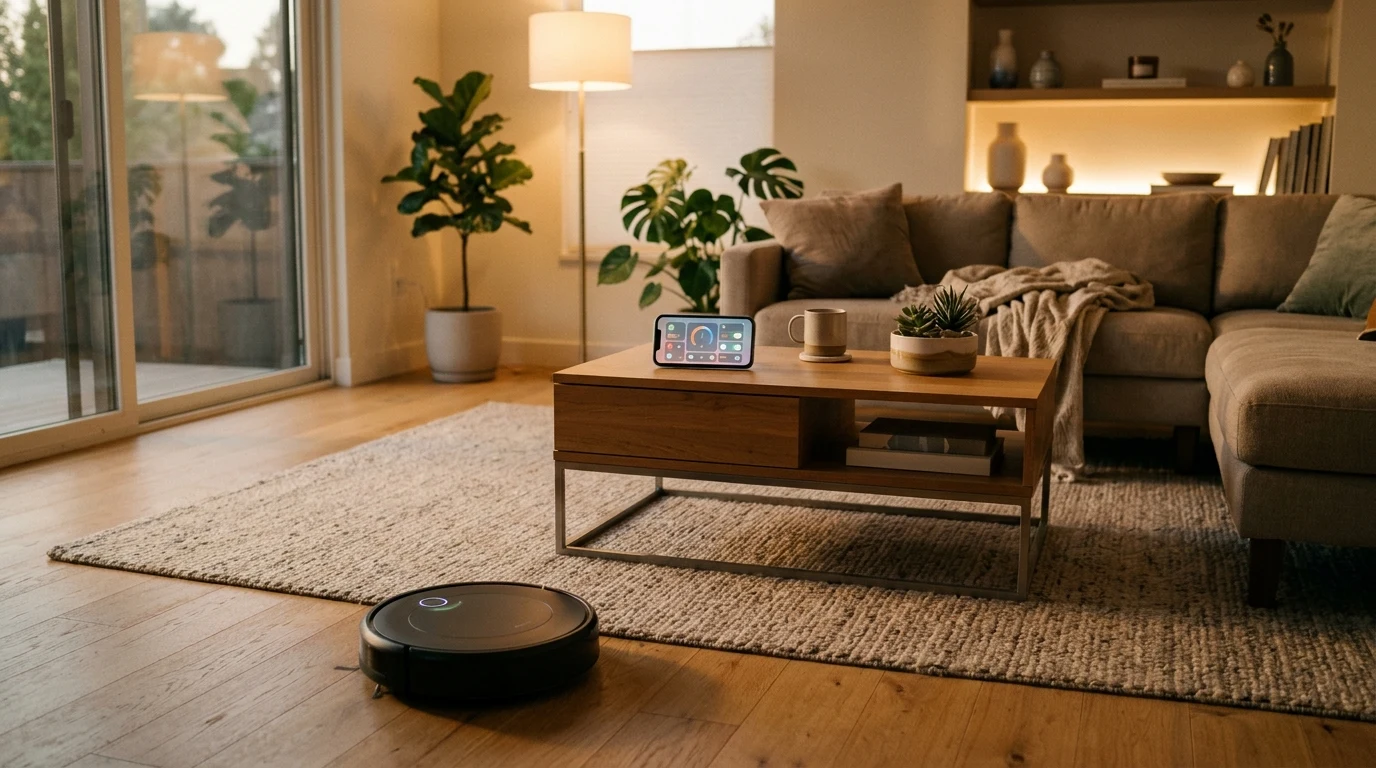
Dreame’s advantage, if it has one, is its experience with home devices. The company already builds robot vacuums and other smart-home products that navigate rooms, map homes, and respond to voice commands. A phone operating system that connects naturally to those devices — a vacuum that starts cleaning when you leave the house, a phone that knows your home’s layout and routines — is a plausible vision. But it is a vision that depends on Dreame selling enough phones to make the ecosystem worth building, and on buyers who already own Dreame home products.
Dreame has said that AIOS will launch in the second half of 2026, but it has not confirmed when or where either phone will launch. That timing matters: an operating system that arrives before its phones, or phones that arrive without a finished operating system, would both be bad signs.
Can a Vacuum Company Succeed in Smartphones?
The smartphone market is the hardest market in consumer electronics to enter. The top five manufacturers control the overwhelming majority of global sales, and the barriers to entry are enormous: carrier relationships, retail distribution, component supply at scale, camera tuning expertise, and years of software support. Companies with far more phone experience than Dreame have failed. Microsoft, with billions of dollars, could not sustain Windows Phone. LG, a veteran manufacturer, exited the phone business in 2021. Essential, founded by Android’s creator, lasted two years.
Against that history, Dreame has three things going for it. First, it is already a large and successful hardware company, with manufacturing scale, supply chains, and retail presence in home appliances. Second, it has a real brand in the smart home, where its robot vacuums compete with iRobot and Roborock. Third, it is entering at a moment when AI is reshaping what a phone is: if the next generation of phones is defined by AI agents rather than by hardware specifications, a newcomer with a fresh approach to AI has a narrow but real opening.
The case against Dreame is simpler: none of its advantages are phone advantages. Building a good vacuum does not teach a company to tune a camera, negotiate with carriers, or support a phone with four years of updates. The modular Nex is a high-risk bet on a concept that has failed repeatedly. And the phone market’s economics are brutal for small players, who pay more for components, get worse retail placement, and struggle to fund the marketing that makes a new brand visible.
The most likely outcome is that Dreame’s phones find a niche rather than the mainstream: enthusiasts who like the modular idea, existing Dreame smart-home customers who want a matching phone, and buyers in China, where Dreame’s brand is strongest and where new phone brands have historically had their best chance. A global breakthrough would require the phones to be genuinely better than the competition on something buyers care about, and that has not been demonstrated yet.
| Factor | Dreame Aurora Nex LS1 | Dreame Aurora Lux |
|---|---|---|
| Positioning | Modular concept flagship | Premium range, the volume seller |
| Signature feature | Magnetic camera attachment point | — |
| Operating system | Aurora AIOS (Android-based) | Aurora AIOS (Android-based) |
| Revealed | China, March 2026; California Next event, November 2026 | China, March 2026; California Next event, November 2026 |
| Launch status | Not launched anywhere | Not launched anywhere |
| Specifications | Only a handful published | Only a handful published |
| AIOS launch | Second half of 2026 | Second half of 2026 |
Modular Phones: A History of Big Ideas and Small Sales
The Aurora Nex LS1 does not arrive in a vacuum. Modular phones have been tried, in different forms, by some of the biggest names in technology, and the results have been consistent: critical interest, commercial failure. Understanding that history is the best way to judge Dreame’s chances.
Google’s Project Ara, announced in 2013, was the most ambitious attempt: a phone with a frame into which users could slot modules for the camera, battery, processor, and more. It generated enormous excitement and was cancelled in 2016 before ever reaching consumers. Motorola’s Moto Mods, launched in 2016, were the most successful modular system in practice: magnetic accessories including a Hasselblad camera, a projector, and extra batteries snapped onto Moto Z phones. Reviewers liked them, but sales were modest, and Motorola stopped making new Mods within a few years.
LG’s G5, also launched in 2016, offered a removable bottom module that could be swapped for a camera grip or a hi-fi audio module. It was widely regarded as a failure, and LG abandoned modularity in its very next phone. Essential, founded by Android creator Andy Rubin, offered a magnetic accessory connector for a 360-degree camera; the company folded in 2020.
The lesson from all four attempts is the same. Modularity solves a problem most buyers do not have: they do not want to choose and carry modules, they want a phone that does everything well out of the box. Module ecosystems are expensive to sustain, and they only work if the manufacturer commits to them for years. Dreame’s magnetic camera mount is a narrower and more focused idea than Project Ara’s everything-modular vision, which may help it. But the burden of proof is on Dreame to show that this time is different.
| Modular attempt | Company | Year | Outcome |
|---|---|---|---|
| Project Ara | 2013–2016 | Cancelled before launch | |
| Moto Mods | Motorola | 2016–2019 | Praised, modest sales, discontinued |
| LG G5 modules | LG | 2016 | Commercial failure, abandoned |
| Essential accessories | Essential | 2017–2020 | Company folded |
| Aurora Nex LS1 | Dreame | 2026 | Shown, not yet launched |
What to Watch Next
Four things will decide whether Dreame’s phone venture matters. First, the launch: Dreame needs to put a real date and price on the Aurora phones, in real markets, with real availability. A phone that is shown but never shipped is a concept, not a product. Second, the module range: the Nex needs more than one camera module, at prices that make sense, to justify its existence. Third, the camera: whatever modules Dreame ships, the photos they produce will be judged against phones from Apple, Samsung, and Google, and the comparison will be unforgiving. Fourth, software support: Dreame needs to promise and deliver years of Android and security updates, because a phone that stops getting updates after a year is a bad buy at any price.
For now, Dreame’s phone announcement is best read as an intention, not an arrival. A vacuum company has shown two phones, one of them modular, running an AI-first operating system, and it has not yet shipped either. That is interesting enough to watch closely and not enough to buy into. The next announcement — a date, a price, a market — is the one that will tell us whether Dreame is serious about phones, or simply showing off.
Frequently Asked Questions
Is Dreame really making smartphones?
Yes. Dreame, best known for robot vacuums, showed two smartphones — the Aurora Nex and the Aurora Lux — at its Next event in California in November 2026. Both had previously been revealed in China in March 2026. Neither phone has launched yet.
What is modular about the Dreame Aurora Nex LS1?
The Aurora Nex LS1 has a magnetic attachment point where the rear camera would normally be, allowing camera modules to be attached magnetically. Dreame has not yet shown the full range of modules or confirmed pricing.
What is Aurora AIOS?
Aurora AIOS is Dreame’s own operating system for its phones, based on Android. Dreame describes it as designed around “proactive service rather than passive response,” meaning AI features that anticipate user needs rather than waiting for commands. Dreame says AIOS will launch in the second half of 2026.
When will Dreame phones launch?
Dreame has not confirmed a launch date or markets for either phone. The company has said AIOS will launch in the second half of 2026, but has given no date for the phones themselves.
Have modular phones worked before?
Not commercially. Google’s Project Ara was cancelled before launch, Motorola’s Moto Mods won praise but sold modestly and were discontinued, LG’s modular G5 failed, and Essential folded. Dreame’s magnetic camera approach is narrower than past attempts, but the burden of proof is on Dreame to show it can succeed where others did not.



Join the discussion
Have a question or a perspective to share?