
AI for Restaurants: 8 Tools for Orders, Staffing and Marketing (2026)
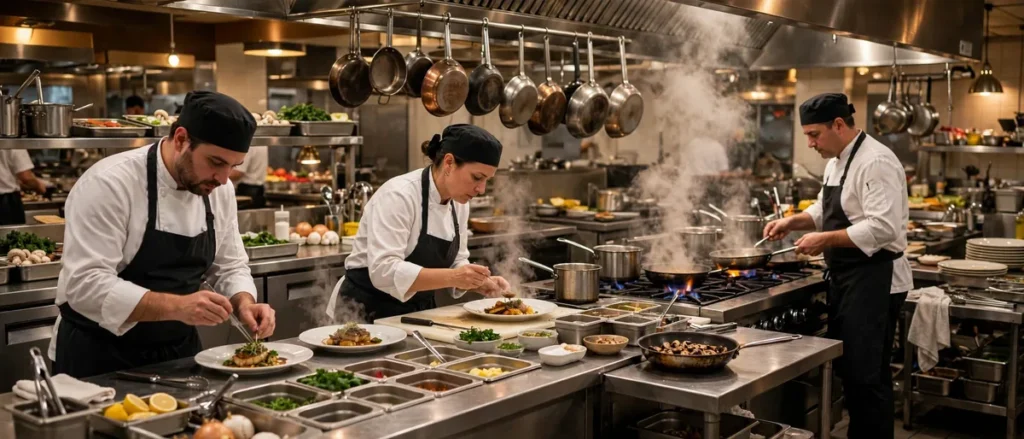
Restaurants operate on razor-thin margins — 3–5% profit is normal — while facing labor shortages, rising food costs, and delivery apps taking 30% commissions. Every inefficiency is existential. AI for restaurants operations in 2026 addresses the industry’s core pressures: voice AI answering phones during rushes, automated scheduling matching labor to demand, online ordering that bypasses commission fees, and marketing that fills slow Tuesdays.
We evaluated eight tools for independent restaurants and small groups (1–10 locations) — not enterprise chains, but the neighborhood Italian place, the taco truck gone brick-and-mortar, the café fighting for regulars. Here’s what actually works.
How AI for Restaurants Operations Handles the Labor Shortage
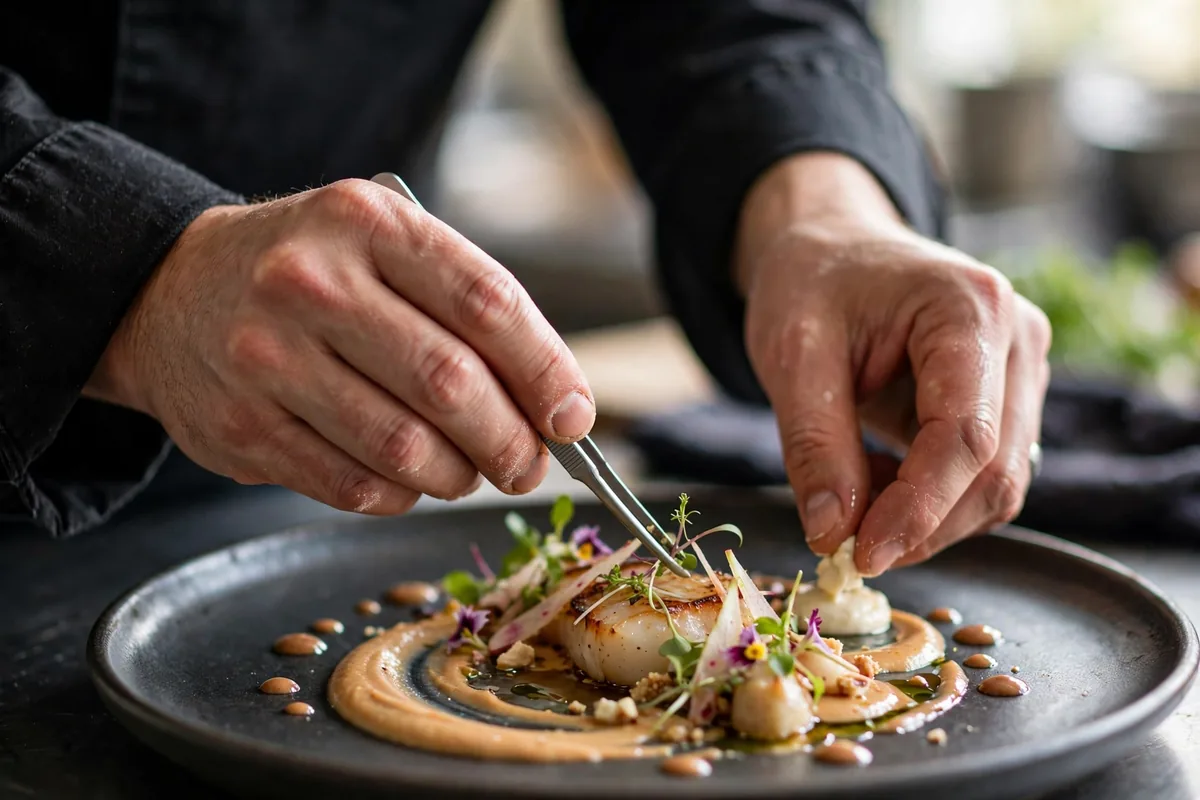
The restaurant labor crisis isn’t temporary — it’s structural. AI doesn’t replace your team; it multiplies them:
- Phone automation. 60–70% of restaurant calls are routine (hours, reservations, takeout orders). Voice AI handles these 24/7, so staff focus on in-person guests.
- Smart scheduling. AI forecasts demand by daypart and builds schedules matching labor to expected covers — cutting overstaffing waste while preventing disastrous understaffing.
- Order automation. Kiosks, QR ordering, and voice drive-thru reduce the staff needed per transaction without hurting throughput.
- Back-office reduction. Invoice processing, inventory counts, and reporting that consumed manager hours now run automatically.
With AI for restaurants operations, the goal isn’t fewer humans — it’s humans doing human work (hospitality, cooking, problem-solving) while AI handles the repetitive rest. The National Restaurant Association tracks these workforce trends closely.
The 5 Jobs AI Does in a Restaurant
1. Order capture. Phone, drive-thru, kiosk, and online ordering — AI takes orders accurately during rushes when humans get overwhelmed, with consistent upselling (“add guac for $2?”) that staff forget under pressure.
2. Staff scheduling. Demand forecasting by hour, auto-generated schedules respecting availability and labor laws, shift-swap automation, and overtime alerts.
3. Marketing and reputation. Automated review requests and responses, email/SMS campaigns for slow periods, social media management, and loyalty programs.
4. Inventory and food cost. AI predicts ingredient needs from sales forecasts, flags waste patterns, automates supplier ordering, and tracks theoretical vs. actual food cost.
5. Guest intelligence. Unified customer profiles showing visit frequency, preferences, and lifetime value — powering personalized offers that turn occasional visitors into regulars.
Together, these five jobs prove AI for restaurants operations attacks both sides of the margin equation: more revenue (orders, marketing, retention) and lower costs (labor, food waste, commissions). For local visibility, pair with our AI Google Business Profile strategies.
How We Tested These 8 Tools
We modeled a 60-seat independent restaurant doing $1M annually:
- Labor savings (30%) — hours saved weekly across phone, scheduling, and admin.
- Revenue impact (25%) — order volume increases, upsell rates, marketing-driven covers.
- Ease of adoption (20%) — can a busy owner deploy without IT help?
- Integration (15%) — compatibility with major POS systems (Toast, Square, Clover).
- Price-to-value (10%) — monthly cost against margin improvement.
1. Toast (AI Suite) — Best Restaurant Platform
Toast dominates independent restaurant POS, and its AI suite now covers the operation: AI phone answering, marketing automation, payroll, and reporting intelligence.
AI highlights
- AI phone assistant taking takeout orders and reservations during rushes.
- Marketing automation with guest segmentation.
- AI payroll and tip management.
Strengths
The ecosystem advantage — POS, payments, payroll, and AI in one system with unified data. Most independents already run Toast.
Watch out for
Hardware and processing lock-in; the full AI suite adds to already-significant monthly costs. Details at Toast.
Pricing: POS from $69/month; AI add-ons vary.
2. SoundHound AI — Best Voice Ordering
SoundHound’s voice AI answers restaurant phones with natural conversation: taking orders, answering questions, handling multiple calls simultaneously — even during Friday dinner rush.
AI highlights
- Natural voice ordering indistinguishable from a good host.
- 100+ simultaneous calls (no busy signals, ever).
- Menu-aware upselling and modification handling.
Strengths
The most polished restaurant voice AI available; dramatic missed-call reduction; integrates with major POS systems.
Watch out for
Per-minute or per-call pricing — model costs against your call volume. Test thoroughly with your actual menu complexity.
Pricing: Custom; typically per-location monthly.
3. 7shifts — Best Staff Scheduling
7shifts is the restaurant industry’s scheduling standard: demand-based scheduling, team communication, labor compliance, and tip pooling — with AI forecasting that predicts staffing needs.
AI highlights
- Demand forecasting by daypart from sales history and events.
- Auto-scheduling respecting availability, skills, and labor laws.
- Overtime prediction and labor cost alerts.
Strengths
Purpose-built for restaurant labor complexity; the compliance features alone justify it in regulated states.
Watch out for
Scheduling-focused — pair with POS and marketing tools for full coverage.
Pricing: From $34.99/month per location.
4. Popmenu — Best Online Presence & Ordering
Popmenu gives independents a digital presence that rivals chains: AI-built websites, commission-free online ordering, automated marketing, and review management.
AI highlights
- AI website builder optimized for restaurant conversion.
- Commission-free online ordering (keep the 30% delivery apps take).
- Automated review responses and guest messaging.
Strengths
The commission savings alone can fund the subscription many times over; beautiful guest-facing experience.
Watch out for
You’re building on their platform — ensure data portability if you ever leave.
Pricing: From $199/month.
5. Owner.com — Best Commission-Free Ordering
Owner.com’s pitch is simple: your own branded online ordering system, website, and marketing automation — designed to break delivery-app dependence. Their AI handles SEO, ads, and customer messaging.
AI highlights
- Branded ordering with your restaurant’s identity.
- AI-managed Google and social ads.
- Automated customer win-back campaigns.
Strengths
Laser-focused on the delivery-app problem; strong ROI case for restaurants doing significant takeout volume.
Watch out for
Best for takeout-heavy concepts; dine-in focused restaurants get less value.
Pricing: Custom; performance-based models available.
6. Presto — Best In-Store Automation
Presto automates the dining room: tabletop ordering and payment, AI phone answering, and drive-thru voice AI — reducing labor needs while speeding table turns.
AI highlights
- Tabletop tablets for ordering and payment.
- Drive-thru voice AI with upsell optimization.
- Real-time operational analytics.
Strengths
Proven at scale (major chains use it); the table-turn improvement directly increases revenue per seat.
Watch out for
Hardware investment required; better suited to casual/fast-casual than fine dining.
Pricing: Custom per-location.
7. Choco — Best Supplier Ordering & Inventory
Choco digitizes the supplier relationship: AI-powered ordering from distributors, invoice digitization, and waste tracking — attacking food cost from the purchasing side.
AI highlights
- One-tap supplier ordering with AI suggestions based on par levels.
- Invoice scanning and price-fluctuation alerts.
- Waste pattern analysis.
Strengths
Addresses the unglamorous but critical food-cost side; free for restaurants (suppliers pay).
Watch out for
Value depends on supplier participation in your market; coverage varies by region.
Pricing: Free for restaurants.
8. Bikky — Best Guest Data Platform
Bikky unifies guest data across POS, online ordering, reservations, and loyalty — then AI segments and activates it: win-back campaigns for lapsed regulars, VIP identification, personalized offers.
AI highlights
- Unified guest profiles across every touchpoint.
- AI lapsed-guest detection with automated win-back.
- Menu and pricing analytics by segment.
Strengths
Turns transaction data into relationships; the lapsed-regular win-back alone drives measurable revenue.
Watch out for
Needs sufficient transaction volume for meaningful segmentation; best for established restaurants.
Pricing: Custom per-location.
Restaurant AI Tools Compared
| Tool | Starting price | Best for | AI standout |
|---|---|---|---|
| Toast | $69/mo+ | Restaurant platform | AI phone + marketing suite |
| SoundHound | Custom | Voice ordering | Natural phone AI |
| 7shifts | $34.99/mo | Staff scheduling | Demand forecasting |
| Popmenu | $199/mo | Online presence | Commission-free ordering |
| Owner.com | Custom | Delivery independence | AI-managed ads |
| Presto | Custom | In-store automation | Tabletop + drive-thru |
| Choco | Free | Supplier ordering | Invoice & waste AI |
| Bikky | Custom | Guest data | Lapsed-regular win-back |
Breaking Free from Delivery Apps: The Math
Third-party delivery takes 15–30% per order. For a restaurant doing $20K monthly in delivery sales, that’s $3,000–$6,000 in commissions — often the entire profit margin on those orders. The AI-powered escape plan:
- Launch commission-free ordering (Popmenu or Owner.com) with your own branding.
- Redirect regulars. Include cards in every delivery-app order: “Order direct next time, get 10% off.” Delivery apps are customer acquisition; direct ordering is retention.
- AI marketing to your list. Every direct order builds your customer database — email and SMS campaigns that delivery apps would never let you run.
- Keep apps for discovery. New customers find you on DoorDash; regulars order direct. The mix shifts over 6–12 months.
Restaurants executing this playbook typically move 40–60% of delivery volume to direct channels within a year — recovering $25K–$50K annually in commissions for a mid-size operation.
Filling Slow Periods with AI Marketing
Tuesday lunch doesn’t have to be dead. AI marketing automation fills the gaps:
- Lapsed guest win-back. “We miss you — 20% off this week” to guests who haven’t visited in 60+ days. Consistently the highest-ROI campaign.
- Weather-triggered offers. Rainy day? Push comfort-food delivery offers automatically. Heatwave? Promote patio seating and cold drinks.
- Event-based campaigns. Local concert, game day, graduation weekend — AI drafts and sends targeted offers tied to community events.
- Birthday automation. Personalized birthday offers drive visits with 3–5x normal open rates.
- Review velocity. Automated post-visit review requests keep your Google rating climbing — critical since ratings directly drive new-guest discovery.
The key: automate the calendar, personalize the message. Generic blasts get ignored; AI-personalized offers (“your usual table is free Thursday”) get opened.
Staffing Optimization: Doing More with Less
AI scheduling typically cuts labor costs 5–10% while improving coverage — here’s how:
- Forecast by 15-minute interval. AI predicts covers from historical sales, weather, events, and trends — far more granular than manager intuition.
- Schedule to demand curves. Staff the Friday 7 PM rush heavily; run lean Tuesday 2 PM. Obvious in principle, rarely executed precisely without AI.
- Automate swaps and time-off. Staff handle their own shift trades within rules you set — managers stop playing schedule Tetris.
- Compliance guardrails. Overtime alerts, minor-hour restrictions, predictive scheduling law compliance — automated, not remembered.
- Performance visibility. Labor cost as % of sales, sales per labor hour, by daypart — the metrics that turn scheduling from art to science.
For a $1M restaurant with 30% labor costs, a 7% scheduling improvement saves $21,000 annually — while staff prefer the fairer, more predictable schedules AI generates. For broader operational efficiency, see how to automate repetitive tasks with AI.
FAQ
Will customers accept AI taking their phone orders?
Yes — when it works well. Modern voice AI handles orders, modifications, and questions naturally; most callers don’t realize it’s AI. The key is graceful human handoff for anything complex. Start with after-hours and overflow calls, expand as confidence builds.
How much does restaurant AI typically cost?
A practical starter stack (7shifts scheduling + Popmenu ordering + review automation) runs $300–$500/month — easily covered by one saved labor shift weekly or a handful of recovered delivery commissions. Full stacks with voice AI run $800–$1,500/month for multi-location operations.
Can AI really reduce our dependence on delivery apps?
Yes, systematically. Commission-free direct ordering plus AI marketing to your customer list shifts regulars from apps to direct over 6–12 months. Keep delivery apps for new-customer discovery; convert regulars to direct. Most restaurants recover 40–60% of delivery volume.
What about older customers who prefer human interaction?
Keep humans available — AI handles the routine so staff have more time for guests who want personal service. The goal is choice, not replacement. Many restaurants find older regulars appreciate shorter phone waits even when AI answers.
Do we need to replace our POS to use these tools?
No. All eight tools integrate with major POS systems (Toast, Square, Clover, Lightspeed). They layer on top of your existing setup. If you’re POS-shopping anyway, Toast’s integrated AI suite is compelling — but don’t rip out a working POS just for AI features. Our AI customer service guide covers the service automation layer.
Conclusion
AI for restaurants operations in 2026 isn’t futuristic — it’s operational: Toast for the platform, SoundHound for voice ordering, 7shifts for scheduling, Popmenu and Owner.com for commission-free ordering, Presto for in-store automation, Choco for food costs, and Bikky for guest intelligence.
Start your AI for restaurants operations journey with your biggest pain — usually phones or scheduling — prove the ROI in 60 days, then expand. In an industry where margins are measured in single digits, AI for restaurants operations isn’t about replacing hospitality. It’s about affording it: the efficiency gains fund the human touches that make restaurants worth visiting. Your competitors are adopting. The tables are waiting.





Join the discussion
Have a question or a perspective to share?