

AI Virtual Receptionist: 6 Services That Never Miss a Call
A missed call at 7pm. A website inquiry that sits unanswered until morning. A new client who hangs up after four rings and books with your competitor. For small businesses, the front desk is where revenue is won or lost — but staffing it around the clock costs $40,000+ a year. An AI virtual receptionist for small business gives you the coverage of a full-time receptionist at roughly a tenth of the cost: answering every call in seconds, booking appointments, qualifying leads, and handling routine requests while you focus on the work itself.
Unlike the basic phone-answering services of the past, today’s AI receptionists are conversational. They understand context (“actually, can we do Thursday instead?”), handle interruptions gracefully, speak multiple languages, and take real actions — updating your CRM, sending confirmation texts, dispatching urgent calls to your cell. The underlying voice technology has matured rapidly thanks to advances in conversational AI from labs like OpenAI, and enterprise contact centers now run on the same principles via platforms like Zendesk. We tested six leading services with small-business scenarios to find the ones worth your money in 2026.
What an AI Virtual Receptionist for Small Business Actually Handles
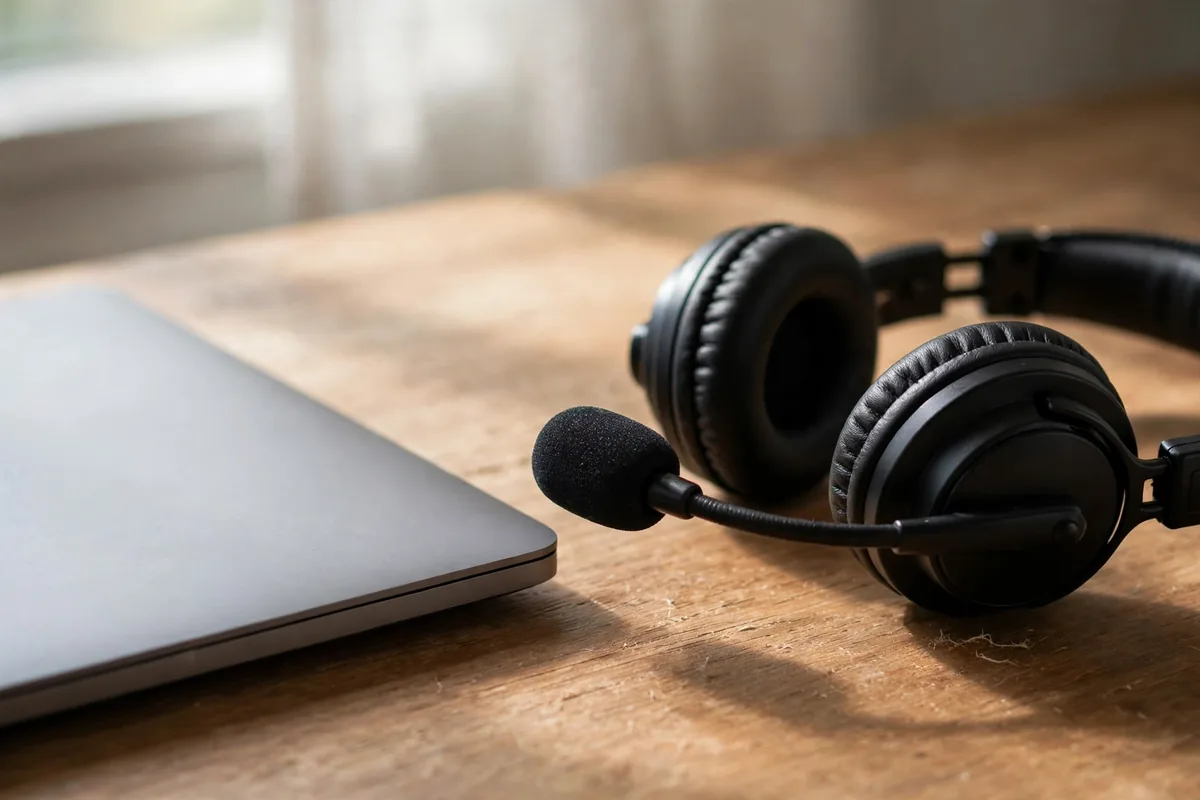
The job description has expanded far beyond “answering the phone.” A modern AI receptionist typically covers:
- Call answering and routing. Picks up in under 10 seconds, greets callers professionally, and routes based on urgency — emergencies to you, routine questions handled on the spot.
- Appointment scheduling. Sees your real calendar availability and books, reschedules, or cancels without double-booking.
- Lead qualification. Asks your qualifying questions (budget, timeline, service needed), scores the lead, and pushes hot ones to you immediately.
- Message taking and summaries. Every call ends with a transcript and a texted summary, so you scan in seconds what used to require listening to voicemail.
- FAQ handling. Hours, pricing, directions, service menus — the AI answers from your business profile without bothering you.
- After-hours and overflow coverage. Nights, weekends, lunch breaks, and those chaotic Monday mornings when three lines ring at once.
The economics are compelling: at $100–$350/month versus $3,500+/month for a human receptionist, even capturing two extra jobs a month pays for the service many times over. For the full front-office picture, see our guide to AI customer service tools.
How We Tested These 6 Services
We evaluated each service as a mystery shopper across four test businesses (plumbing, dental, law firm, boutique consultancy):
- Voice naturalness (30%) — would a real caller feel comfortable, or does it sound robotic?
- Task completion (25%) — did appointments land correctly in the calendar? Were messages accurate?
- Escalation judgment (20%) — did urgent calls reach us while routine ones were handled?
- Integrations (15%) — CRM, calendar, and industry software connections.
- Pricing clarity (10%) — no gotchas on overages or setup fees.
We placed dozens of test calls, including difficult ones: rambling callers, Spanish speakers, angry customers, and multi-part rescheduling requests.
1. Smith.ai — Best Hybrid (AI + Human Backup)

Smith.ai’s differentiator is the safety net: AI handles routine calls instantly, and trained human receptionists take over for complex, sensitive, or high-value conversations. For law firms, medical practices, and financial advisors — where one mishandled call can cost thousands — that backup is worth every penny.
What it handles
Full call answering, appointment booking, lead qualification with custom intake questions, payment collection, and CRM updates. The AI drafts responses; humans review edge cases.
Strengths
- Human fallback for calls the AI flags as complex or emotional.
- Excellent for regulated industries (conflict checks for law firms, HIPAA-aware workflows).
- Bilingual English/Spanish across both AI and human teams.
Watch out for
The most expensive option here, and human-answered minutes cost more than AI minutes. Setup involves a real onboarding call — thorough, but not instant.
Pricing: From $285/month (AI + human hybrid plans).
2. Rosie — Best Pure AI Receptionist
Rosie is the closest thing to hiring a perfect receptionist who never sleeps. Its voice AI is remarkably human — most callers don’t realize they’re talking to software — and it integrates deeply with industry tools like Housecall Pro, Clio, and ServiceTitan.
What it handles
Call answering, scheduling, rescheduling, lead qualification, spam blocking, and instant text summaries. It learns your business from your website and a short onboarding questionnaire.
Strengths
- Best voice quality in this roundup — natural pacing, appropriate pauses, handles interruptions.
- 50+ native integrations mean appointments and notes land where they belong.
- Scales from solopreneur to 50-person company without changing plans.
Watch out for
Premium pricing; no human fallback (though escalation to your phone is instant). Customization beyond the onboarding profile requires support help.
Pricing: From $329/month.
3. Ruby — Best Human Touch
Ruby (formerly Ruby Receptionists) takes the opposite approach: real, US-based humans answer every call, now augmented by AI for summaries and routing. If your brand is built on white-glove personal touch — wealth management, high-end real estate, boutique law — Ruby’s humans beat any AI on warmth.
What it handles
Live call answering, message taking, appointment scheduling, and warm transfers. AI assists behind the scenes with transcription and CRM logging.
Strengths
- Genuinely delightful human interactions — callers consistently praise the experience.
- Bilingual receptionists.
- Integrates with most major CRMs and calendars.
Watch out for
Human-only answering means higher cost and no instant AI pickup during extreme spikes. After-hours coverage costs extra on some plans.
Pricing: From $389/month.
4. Abby Connect — Best for Small Teams
Abby Connect positions itself as the receptionist for growing teams: dedicated human receptionists who learn your business, backed by smart call handling tech. It’s less famous than Ruby but beloved by its customers, with consistently top-rated support.
What it handles
Call answering, scheduling, lead qualification, and warm transfers, with a dedicated team assigned to your account (not a random pool).
Strengths
- Dedicated receptionist team that actually knows your callers over time.
- Transparent per-minute pricing with no long contracts.
- Great onboarding — they interview you about your business.
Watch out for
Smaller company means fewer native integrations than Smith.ai or Rosie; AI features are lighter (this is a human-first service).
Pricing: From $329/month.
5. Goodcall — Best for Home Services
Goodcall’s AI receptionist is trained specifically for trades: HVAC, plumbing, electrical, pest control, and 30+ other home-service verticals. It knows what an emergency sounds like, quotes price ranges, and dispatches to your on-call tech.
What it handles
24/7 call answering, emergency escalation, appointment booking synced with field-service software, estimate follow-ups, and review requests after jobs.
Strengths
- Trade-specific intelligence — understands “my AC is blowing warm air” as urgent in July.
- Integrates with Housecall Pro, ServiceTitan, and Jobber.
- Texts customers ETAs and follow-ups automatically.
Watch out for
Narrow vertical focus — if you’re not in home services, the specialization doesn’t help you. Voice quality is good but a notch below Rosie.
Pricing: From $199/month.
6. Dialzara — Best Budget AI Receptionist
Dialzara delivers the core virtual-receptionist experience — answering, scheduling, summaries, spam blocking — for under $100/month. It’s the proof that you don’t need enterprise budgets for competent AI call handling.
What it handles
Call answering with natural voices, calendar booking, message summaries via text/email, and spam filtering.
Strengths
- Lowest price among credible options.
- Five-minute setup; genuinely simple dashboard.
- No long-term contract.
Watch out for
Fewer integrations, less customization, and no human fallback. Best for straightforward businesses, not complex intake workflows.
Pricing: From $89/month.
AI Virtual Receptionist Services Compared
| Service | Model | Starting price | Best for |
|---|---|---|---|
| Smith.ai | AI + human hybrid | $285/mo | High-stakes calls (legal, medical) |
| Rosie | Pure AI | $329/mo | Best voice quality overall |
| Ruby | Human + AI assist | $389/mo | White-glove personal touch |
| Abby Connect | Human team | $329/mo | Dedicated small-team feel |
| Goodcall | AI (trade-tuned) | $199/mo | Home services |
| Dialzara | AI (budget) | $89/mo | Tight budgets, simple needs |
AI vs. Human vs. Hybrid: Which Model Fits?
The AI virtual receptionist for small business market has split into three philosophies:
- Pure AI (Rosie, Goodcall, Dialzara): Instant pickup, unlimited simultaneous calls, lowest cost. Best when call volume is high and interactions are routine. The weakness: genuinely upset or confused callers sometimes need a human.
- Human-first (Ruby, Abby Connect): Warmest experience, best judgment. Best when your brand is premium or calls are complex. The weakness: cost, and humans can’t take 10 calls at once.
- Hybrid (Smith.ai): AI answers instantly; humans catch what the AI flags. Best of both, at the highest price. Best when a single lost call costs more than the monthly fee.
Our take for most small businesses: start with pure AI. It’s dramatically better than voicemail, and you can upgrade to hybrid if you find the AI mishandling specific call types. Review your call transcripts weekly for the first month — the patterns will tell you quickly.
Setup Checklist: Live in 48 Hours
- Day 1 morning: Sign up and complete the business profile — services, hours, staff, FAQs. The more detail you give, the smarter the AI.
- Day 1 afternoon: Connect your calendar and CRM. Test with your own phone: call the forwarding number and try to book, reschedule, and ask a weird question.
- Day 2 morning: Define escalation rules. Which calls ring your cell immediately? (Hint: new leads and emergencies yes; appointment confirmations no.)
- Day 2 afternoon: Update your voicemail greeting to mention the new system, and add the service to your Google Business Profile messaging.
Then monitor for two weeks: read every transcript summary, note any mishandled calls, and tune the instructions. Most services let you refine the AI’s behavior with plain-English feedback.
After-Hours Call Scripts That Convert
An AI receptionist is only as good as its scripts. Write three: the standard greeting with your business name and an offer to help, the appointment-booking flow with your actual availability rules, and the urgent-call escalation with clear criteria for what counts as urgent. Test each script by calling your own number after hours and listening critically.
Review call transcripts weekly for the first month. You will find phrasing that confuses callers, questions the AI fumbles, and edge cases nobody predicted. Each fix compounds: by week four, the scripts handle 95% of after-hours calls without a hitch.
FAQ
Will callers know they’re talking to an AI virtual receptionist?
The best services introduce themselves transparently (“Hi, I’m the virtual receptionist for…”), which callers increasingly accept — especially when the alternative was voicemail. Voice quality on top services is natural enough that conversations flow normally. Some states require AI disclosure on calls, so transparency is also the legally safe choice.
Can an AI receptionist really book appointments correctly?
Yes — calendar integration is standard, and double-booking prevention is table stakes. The AI sees real availability, respects buffers between appointments, and handles rescheduling requests conversationally. Test it with five tricky scenarios during your trial week.
What happens when the AI can’t handle a call?
Every service has escalation paths: warm transfer to your cell, detailed message with transcript, or (with Smith.ai) handoff to a human receptionist. You define the triggers — specific keywords, caller frustration signals, or call types.
How much does an AI virtual receptionist for small business cost?
Pure AI services run $89–$329/month; hybrid AI+human runs $285–$400/month; human-first runs $329–$500+/month. Compare against $3,500+/month for an in-house receptionist, and factor in the revenue from calls you’d otherwise miss. Most businesses break even by capturing 1–2 extra jobs monthly.
Can it handle multiple languages?
Rosie, Smith.ai, and Ruby all offer Spanish support; several handle additional languages. If you serve multilingual communities, confirm language coverage during the trial — it’s a major differentiator. Under the hood, these systems build on AI voice generation technology that keeps improving yearly.
Should I replace my human receptionist entirely?
Usually not at first. The winning pattern: AI covers nights, weekends, lunch, and overflow — the times a human isn’t there anyway. Many businesses keep their human for in-person greeting and complex work while the AI handles the phones. It’s augmentation, not replacement, and you can build matching website chat with our no-code AI chatbot guide.
Conclusion
An AI virtual receptionist for small business is one of the highest-ROI investments a small company can make in 2026. Every call answered is a customer kept; every appointment booked while you sleep is revenue you didn’t have to chase.
Start with your biggest pain: if it’s missed calls after hours, Dialzara or Goodcall will transform your week for under $200. If it’s high-stakes intake, Smith.ai’s hybrid model is worth the premium. Either way, stop letting the phone ring into the void — your competitors already stopped.





Join the discussion
Have a question or a perspective to share?