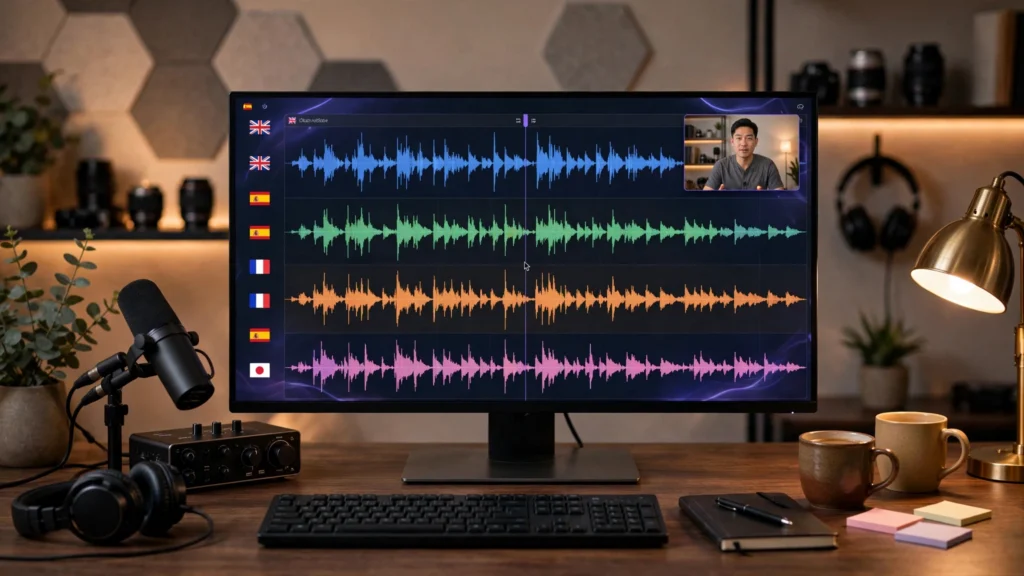
Video is the undisputed dominant medium of global internet communication. YouTube, TikTok, Instagram Reels, and corporate learning management systems collectively stream billions of hours of visual content every day. Yet historically, even the most successful digital creators and multinational corporations faced an insurmountable linguistic barrier: over 80% of the world's population does not speak English as a primary language. For decades, expanding video reach across international borders required hiring expensive local voice actors, booking recording studios, manually translating scripts, and manually editing sound tracks—a slow process costing thousands of dollars per finished video.
In 2026, the economics of global media distribution have been completely rewritten by generative artificial intelligence. Modern AI video dubbing software has transformed localization from a tedious months-long post-production nightmare into an automated, one-click workflow. Today's generative engines do not merely read translated text with robotic text-to-speech voices; they clone the original speaker's exact vocal timbre, capture subtle emotional cadences, translate idioms with cultural nuance, and modify facial pixels to achieve realistic voice matched lip sync dubbing.
Deploying an end-to-end automated video translation pipeline enables YouTube creators, EdTech platforms, and SaaS enterprises to unlock international audiences instantly. Whether localizing an educational course into Spanish and Portuguese or launching localized product marketing campaigns across Japan and Germany, multilingual video localization has become the single fastest way to multiply digital reach. Based on real-world translation accuracy, voice cloning fidelity, generative lip-sync alignment, and multi-track audio mastering, this editorial review evaluates the premier AI video dubbing platforms available in 2026.
Editorial Note: DroidOrbit provides strictly independent software evaluations based on public feature sets, developer documentation, and verified user community testing. We do not accept sponsored affiliate placements. Subscription costs referenced in this article reflect public vendor schedules at the time of publication; prices may change — check the official site for current tier structures.
The Anatomy of Modern AI Dubbing: Beyond Basic Subtitles
To evaluate dubbing software effectively, content creators and enterprise marketing leaders must understand the four distinct AI technologies that work together in a state-of-the-art dubbing pipeline:
1. Automated Speech Recognition (ASR) and Temporal Timestamping
The dubbing engine begins by transcribing the original audio track into written text using state-of-the-art speech recognition models (such as Whisper or proprietary acoustic engines). It maps every syllable to exact millisecond timestamps, isolating distinct speakers and separating spoken dialogue from background music and ambient sound effects.
2. Contextual Machine Translation (MT) and Pacing Adjustment
Literal word-for-word translation creates catastrophic synchronization failures because different languages require wildly different syllable counts to convey the exact same idea (e.g., German sentences are typically 20% to 30% longer than English equivalents). Modern dubbing systems utilize LLM translation that intelligently contracts or expands phrasing while preserving natural meaning, ensuring the translated dialogue matches the speaker's original breath pauses.
3. Zero-Shot Voice Cloning and Emotional Inflection
Rather than assigning a generic stock narrator, modern platforms sample 10 to 30 seconds of the original speaker's voice to synthesize an acoustic neural voice clone. The cloned voice preserves the speaker's vocal pitch, age, accent warmth, and energetic emotion across dozens of foreign languages.
4. Generative AI Video Lip-Syncing
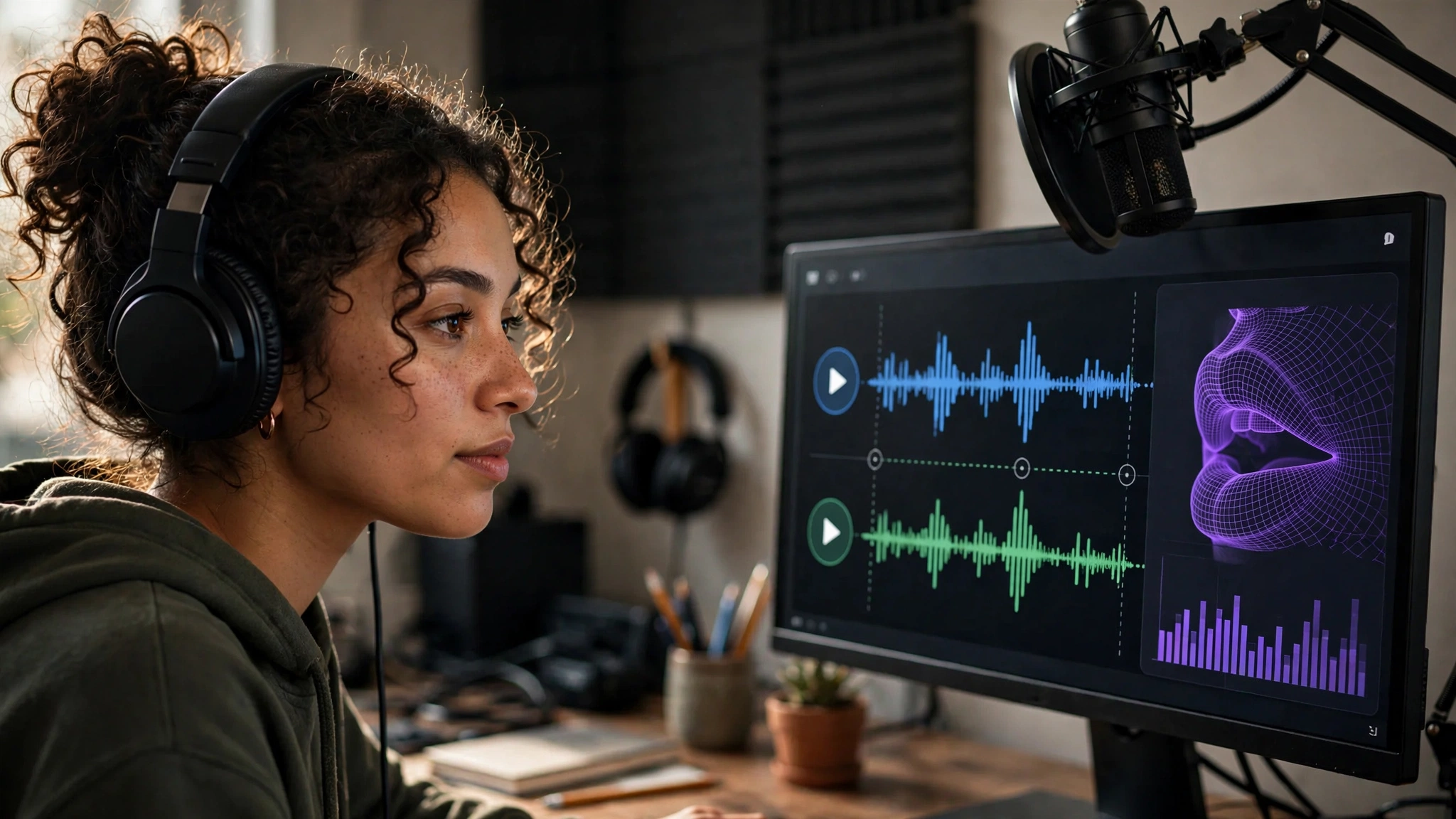
The final and most visually impressive frontier is generative lip-synchronization. Using specialized diffusion and generative adversarial vision models (such as Wav2Lip derivatives), the software modifies the speaker's mouth, jawline, and facial muscle movements in the video frames to match the phonetic shapes of the newly generated foreign language words, eliminating the jarring "badly dubbed movie" aesthetic.
Top 5 AI Video Dubbing Software Platforms in 2026
We evaluated the leading automated video dubbing solutions across translation fidelity, voice cloning naturalness, lip-sync quality, and workflow ergonomics:
1. HeyGen — The Gold Standard for Hyper-Realistic Lip-Sync Dubbing
HeyGen has established itself as the undisputed market leader in generative video translation, celebrated for its astonishingly realistic visual lip-syncing and flawless voice replication.
- Core Capabilities: Upload any video up to several gigabytes, select your target languages (over 70 supported), and HeyGen automatically transcribes, translates, voice-clones, and lip-syncs the footage in a single automated pass.
- Multi-Speaker Isolation: Seamlessly detects and separates multiple people speaking in a podcast or panel discussion, assigning unique cloned voices to each participant.
- Enterprise Studio: Offers granular transcript editing where creators can adjust translated phrasing and regenerate individual sentences without re-rendering the entire video.
2. ElevenLabs Dubbing Studio — Unmatched Audio Fidelity and Emotional Resonance
ElevenLabs is globally recognized as the benchmark in synthetic voice synthesis. Its dedicated Dubbing Studio pairs its world-class voice cloning models with professional multi-track audio production tools.
- Core Capabilities: Excels at emotional capture, whispering, laughing, and dynamic vocal energy. Its proprietary audio source separation isolates dialogue from complex background music and cinematic sound effects, seamlessly re-mixing the foreign dialogue into the original audio soundscape.
- Granular Audio Timeline: Provides a professional DAW-like timeline interface where audio engineers can manually adjust timing, pitch, and translation wording at the millisecond level.
- Supported Languages: Over 30 languages supported with native-speaker fluency and authentic regional accents.
3. Rask AI — The Creator Favorite for YouTube and Social Localization
Rask AI is specifically optimized for content creators, digital educators, and social media agencies looking to distribute long-form and short-form videos across global channels.
- Core Capabilities: Features native YouTube integration that can fetch videos directly from URLs and export multi-language audio tracks formatted specifically for YouTube's multi-audio track feature.
- Automated Shorts Repurposing: In addition to dubbing, Rask identifies viral moments in long-form videos, automatically clips them into vertical 9:16 aspect ratios, translates dialogue, and adds animated multilingual subtitles.
- Voice Retention: High-fidelity voice cloning across more than 130 languages.
4. Dubverse.ai — Fast, Cost-Effective Enterprise Video Localization
Dubverse is engineered for high-volume video production teams, corporate HR departments, and educational institutions requiring rapid turnaround across diverse dialects.
- Core Capabilities: Employs a script-first workflow that generates human-readable translation side-by-side with original text, allowing bilingual editors to verify technical terminology before synthetic speech rendering.
- Diverse Voice Library: In addition to voice cloning, Dubverse offers a library of over 500 pre-licensed regional character voices tailored for educational and instructional content.
- Subtitling Engine: Automatically produces synchronized SRT and VTT subtitle files alongside audio renders.
5. Speechify Dubbing — Lightweight Workflow for Educators and Publishers
Originally celebrated for its text-to-speech reading applications, Speechify's video dubbing suite provides a frictionless, browser-based tool for converting webinars, lectures, and tutorials into global languages.
- Core Capabilities: One-click translation across 40+ languages with intuitive pronunciation dictionaries that allow creators to enforce correct phonetic pronunciation for brand names and acronyms.
- Audio Cleaning: Automatically removes background hiss, hums, and filler words (um, uh) during the transcription pass.
AI Video Dubbing Software Comparison Matrix
Platform | Generative Lip-Sync | Voice Cloning Quality | Audio Background Separation | Multi-Speaker Support | Best For |
HeyGen | Industry-Leading Realistic Lip-Sync | Exceptional (Preserves accent) | High Quality | Yes (Auto-Detect) | High-Impact Video Creators & Marketing |
ElevenLabs | Available via Partners / API | Unmatched Emotional Realism | World-Class Dynamic Track Isolation | Yes (Multi-Track) | Podcasters, Filmmakers & Audio Pros |
Rask AI | High Quality Lip-Sync | Very Good (130+ Languages) | Built-In Automatic | Yes | YouTube Creators & Social Agencies |
Dubverse | Basic / Script Focused | Good (Voice Library + Clone) | Standard | Yes | EdTech, E-Learning & Corporate Training |
Speechify | No (Audio Only) | Clear & Articulate | Basic Denoising | Yes | Educators & Rapid Publishing |
How to Implement a Multi-Language YouTube Growth Strategy
For digital creators and media brands, multi-language dubbing represents the highest-leverage growth vector in modern digital media. Here is how leading YouTube channels execute the strategy in 2026:
1. Leverage YouTube's Native Multi-Language Audio Feature
Rather than launching separate, fragmented regional channels (e.g., "Channel Spanish," "Channel Portuguese") that divide your subscriber base, utilize YouTube's native Multi-Audio Track feature. You can upload multiple dubbed audio files to a single video. When a viewer in Mexico watches your video, YouTube automatically plays the Spanish audio track while preserving all view counts, likes, and comments on your primary channel.
2. Prioritize High-Yield Geographic Demographics
Begin by analyzing your existing YouTube Analytics data. For most English-speaking channels, localizing into Spanish (targeting Latin America and Spain), Portuguese (targeting Brazil), and Hindi (targeting India) yields immediate audience growth, as these regions represent massive video consumption demographics with lower competitive saturation.
3. Establish Pronunciation Rules for Brand Names
Before batch-rendering hundreds of videos, utilize your software's glossary or pronunciation dictionary. Ensure that proprietary company names, software acronyms, and product models are pronounced consistently rather than being awkwardly translated phonetically.
Phase 5 — Post-Production Audio Mastering, Dialect Calibration, and QA Protocols
While AI dubbing models automate 90% of translation and voice synthesis, achieving broadcast-quality global releases requires meticulous post-production quality control.
1. Dynamic Range Compression and Broadcast Loudness Standards
Synthetic speech generated across different language models can exhibit inconsistent peak volumes. Before publishing dubbed audio to platforms like YouTube or corporate learning portals, pass audio stems through dynamic range compression and normalize overall loudness to industry-standard targets (-14 LUFS for YouTube and Spotify, -24 LKFS for broadcast television). This ensures seamless volume transitions when viewers toggle between native and dubbed audio tracks.
2. Regional Dialect Calibration and Cultural Nuance
Spanish, French, Portuguese, and Arabic feature substantial regional variations. An educational video dubbed in Castilian Spanish (with distinctive European idioms and pronunciation) may feel jarring or unapproachable to an audience in Mexico or Colombia. Always calibrate your software's regional locale settings to match your primary target demographic (e.g., selecting Latin American Spanish vs European Spanish, or Brazilian Portuguese vs European Portuguese) to maximize audience engagement.
3. Human-in-the-Loop Quality Assurance Sign-Off
For high-stakes commercial campaigns or complex technical lectures, establish a rapid human-in-the-loop QA step. Have a native speaker review the generated translated transcript to catch mispronounced technical acronyms, awkward idiomatic phrasings, or cultural missteps before pushing the localized video live to international audiences.
Frequently Asked Questions (FAQ)
Does AI video dubbing sound natural or robotic?
In 2026, modern voice synthesis has crossed the uncanny valley. By analyzing vocal timbre, breathing cadences, and emotional tone, premier tools like ElevenLabs and HeyGen produce dubbed audio that is virtually indistinguishable from professional voice actors.
How does AI lip-syncing work without distorting the video?
Generative lip-sync models utilize computer vision neural networks trained on facial biomechanics. The model isolates the lower half of the speaker's face, tracks facial landmark points, and generates synthetic frames where the lips, chin, and teeth move in realistic synchronization with the new phonetic sounds, blending seamless edges into the original video.
Can AI dubbing preserve background music and sound effects?
Yes. Top-tier platforms employ AI stem separation models that deconstruct the original audio into isolated layers: dialogue, music, and sound effects (SFX). The software replaces only the dialogue stem with the foreign translated voice, then remixes it seamlessly over the original background music.
What video formats are supported by AI dubbing tools?
Virtually all major platforms support standard MP4, MOV, WEBM, and AVI files up to 4K resolution. Many platforms also accept direct URLs from YouTube, Google Drive, Vimeo, and Loom for effortless cloud importing.
How much does AI video dubbing cost compared to traditional studios?
Traditional human voice dubbing typically costs between $50 and $150 per minute of finished video, totaling thousands of dollars for a 20-minute video. AI dubbing software typically costs between $1 and $3 per minute of video, slashing localization costs by 95% while reducing turnaround time from three weeks to ten minutes. Pricing may change — check the official site for current tier structures.
Are there copyright issues with cloning my own voice for dubbing?
No. When you clone your own voice or have explicit written contractual authorization from on-screen presenters, utilizing voice cloning for localization is completely lawful. Reputable platforms enforce voice authorization consent prompts to prevent unauthorized voice impersonation.
Conclusion: Unlocking Universal Global Reach
The linguistic boundaries that historically divided the global internet are rapidly evaporating. Relying exclusively on English-language video leaves billions of potential customers, subscribers, and students inaccessible.
With modern AI video dubbing software, expanding your digital presence into dozens of global markets is no longer restricted to Hollywood studios with massive budgets. By pairing voice cloning, intelligent contextual translation, and generative lip-syncing, creators and businesses can communicate with universal authenticity, multiplying their global reach and revenue in 2026.