

On October 8, 2026, Google announced the Gemini agent — which it describes as “your new single, universal agent for work” — at its Gemini at Work 2026 event. Instead of juggling a dozen AI tools, the idea is simple: one prompt box that handles knowledge work, question answering, content creation, and coding. You give it objectives, not step-by-step instructions, and it plans the work, picks the right model for the job, uses skills and tools, and connects to your business systems to get it done. Right now it is in private preview for enterprise customers only, with no general-access date announced.
This guide covers everything Google has actually announced: what the Gemini agent is, how it works, where it shows up, who can get it, and what it means for the way we work — plus how it fits into the fast-moving 2026 AI agent race alongside Meta Muse and OpenAI Dots AI.

What Is the Gemini Agent?
The Gemini agent is Google’s universal AI agent for work. Where most AI assistants answer one question at a time, an agent takes on multi-step work: researching a topic, drafting a document, analyzing data, or helping with code — carrying a task from start to finish with minimal supervision.
Google’s framing is deliberate. The company calls it a single agent — one place to go — and a universal agent — one system that works across the apps and data a business already uses. The headline capabilities Google announced are:
- Knowledge work: research, summarization, analysis, and document drafting across your company’s information.
- Question answering: answers grounded in connected business systems, not just general web knowledge.
- Content creation: drafts, reports, presentations, and other work artifacts.
- Coding: assistance with software tasks, from one prompt box.
The interaction model is conversational — you describe the outcome you want — but the execution is agentic: the system breaks the objective into steps, calls on the right tools and integrations, and keeps going until the work is done.

The Announcement: Gemini at Work 2026
Google unveiled the Gemini agent on October 8, 2026, at Gemini at Work 2026, its Google Cloud event focused on enterprise AI. The timing is no accident: it lands exactly one month after Meta’s Muse announcement (September 8, 2026) and a little over a week after OpenAI’s Dots AI (September 29, 2026). The three launches together mark 2026 as the year the AI agent race went mainstream — and Google is positioning its entry as the work-focused one. For a head-to-head look at all three, see our comparison: Gemini Agent vs Muse vs Dots AI: The 2026 AI Agent War.
Alongside the agent itself, Google used the keynote to underline Gemini’s scale. According to the company and the Thomas Kurian keynote:
- Gemini has more than 1 billion monthly active users.
- Roughly 90% of the Fortune 100 use Gemini Enterprise.
- About 500 customers processed over 1 trillion tokens each in the past year.
- Around 80% of Google Cloud customers use AI products.
Those numbers matter because an agent is only as useful as the ecosystem around it — and Google is arguing that its ecosystem is already enormous.
How It Works: Objectives, Not Instructions
The core design principle Google emphasizes is giving the agent objectives, not instructions. Instead of telling it exactly what to do at each step, you describe the goal — “prepare a competitive brief on our top three rivals” — and the agent plans the work itself: gathering information, analyzing it, and producing the deliverable.
Dynamic model selection
One of the most notable technical details: the Gemini agent does not rely on a single model. It uses dynamic model selection, picking the best model for each job as the work unfolds. At launch, it can draw on both the Gemini and Claude model families, with open-source models and other private models planned for later. Google also says cost controls are built in, so enterprises can manage spend as agents consume tokens across models.
This is a meaningful departure from the usual single-model assistant. In practice, it means a routine summarization might run on a fast, cheap model while a complex analysis gets routed to a more capable one — automatically. The sportswear company On is among the early customers Google cites as having tested this model-selection approach.
Skills, tools, and business-system connections
Agents earn their keep through skills and tools — the ability to take actions, not just generate text. The Gemini agent connects to business systems so it can work with real company data: pulling numbers from a spreadsheet, referencing files in Drive, or updating records in connected apps. Google lists integrations across the tools enterprises already use, covered in detail below.
Memory
The agent ships with four types of memory, including session memory. Memory is what lets an agent stay useful across a long piece of work — remembering the context of an ongoing project rather than starting cold every time you open a new chat. Google has not published the full taxonomy of all four memory types, so treat the details as limited for now.
Cloud-hosted execution
Tasks run in the cloud, which means work continues even after you close your laptop. Ask the agent to compile a research brief in the evening; it keeps working and the result is waiting in the morning. For long-running knowledge work, that persistence is arguably as important as the intelligence itself.
Coworker Agents: AI Colleagues With Their Own Email
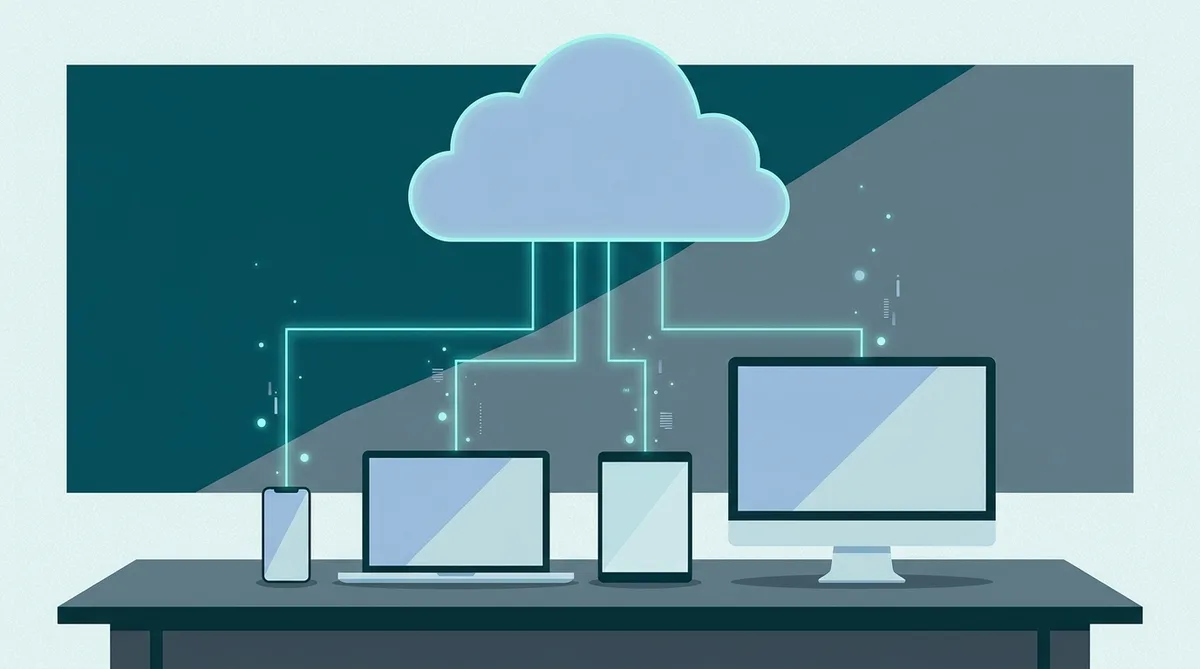
Perhaps the most striking announcement is coworker agents: you can create an agent for a specific role or team, and it gets its own email address (at @agents.company.com), its own calendar, and its own Drive. It appears in the company directory and can be added to Google Chat spaces like any other team member.
Think about what that implies. A “market research analyst” agent could be invited to a Chat space, receive briefs by email, keep its own working files in Drive, and hold focus time on its calendar. It is a small conceptual leap from “AI tool” to “AI colleague” — and it raises real questions about management, accountability, and how teams organize around agents, which enterprises will have to work through during the preview.
Where You’ll Find It: Surfaces and Integrations
Google is meeting workers where they already are. The Gemini agent is available across:
| Surface | What it covers |
|---|---|
| Gemini Enterprise app | The dedicated home for the agent experience |
| Google Workspace | Gmail, Docs, Slides, Sheets — the core productivity suite |
| Mobile, desktop, web | Platform-wide availability, not tied to one device |
| Slack | Agent access inside team chat |
| Microsoft 365 | Works alongside non-Google productivity stacks |
| Salesforce | CRM data in reach of the agent |
| Jira | Project and issue tracking |
| Git | Code repositories for development work |
| ServiceNow | IT service workflows |
| Shopify | Commerce data and operations |
The Microsoft 365 and Slack entries are worth noting: Google is not demanding that companies live entirely inside Workspace. An agent that can work across Google and non-Google stacks has a much larger addressable market — and signals that Google sees this as a platform play, not a Workspace upsell.
Availability: Private Preview for Enterprises
Here is the honest status: the Gemini agent is in private preview for enterprise customers only. Google has not announced a general-access date, a consumer version, or public pricing. If you are an individual user or a small business hoping to try it this week, you cannot — and any site telling you otherwise is guessing.
That is normal for enterprise AI rollouts: private previews let Google harden security, compliance, and administration with a limited set of customers before wider release. For a realistic walkthrough of the enterprise path and what everyone else should do in the meantime, see How to Get Access to Google’s Gemini Agent (2026).
Early Customers Google Is Citing
Google named several early customers at the event. Treat these as Google’s chosen examples, not independent case studies:
- On (sportswear) — tested the dynamic model-selection approach.
- Shopify — among the early enterprise testers.
- PayPal — cited at 10 million multi-model requests per week.
- Bradesco — document review reportedly cut from 1 hour to 5 minutes.
- Orange Spain — built 1,000+ custom agents.
The PayPal and Orange Spain figures are the most telling: they suggest enterprises are not just piloting one agent, but running agent workloads at real scale — millions of requests, thousands of agents.
What This Means for Workers and Businesses
Strip away the launch-day framing and the Gemini agent points at a concrete shift: the unit of AI interaction is moving from the prompt to the project. Instead of asking an AI ten questions to assemble a report, you hand it the objective and review the output. That changes which skills matter — briefing, reviewing, and verifying become more valuable than drafting from scratch.
For businesses, three implications stand out:
- Integration depth decides value. An agent connected to your CRM, docs, and chat is worth far more than a clever chatbot. Google’s integration list is its moat.
- Cost management becomes an IT function. Dynamic model selection with built-in cost controls acknowledges that agent workloads can get expensive fast. Expect FinOps-style oversight for AI spend.
- Coworker agents force org design questions. When an agent has an email address and a calendar, someone has to manage it. New roles — agent supervisors, agent librarians — are easy to imagine.
For a concrete look at how a workday could change, see 5 Ways the Gemini Agent Could Change Your Workday.
The 2026 Agent Race: A Timeline
| Date | Company | Announcement |
|---|---|---|
| September 8, 2026 | Meta | Muse — Meta’s personal AI agent (see our complete Muse guide) |
| September 29, 2026 | OpenAI | Dots AI — OpenAI’s agent entry |
| October 8, 2026 | Gemini agent — “your new single, universal agent for work” |
Three major agent launches in one month is not a coincidence — it is a land grab. Each company is defining the category in its own image: Meta around the personal agent, OpenAI around its model ecosystem, Google around enterprise work. The interesting question is not who “wins” but whether agents converge on shared standards or fragment into walled gardens. Google’s multi-model stance (Gemini and Claude, with more to come) hints at the former.
Frequently Asked Questions
What is Google’s Gemini agent?
It is Google’s universal AI agent for work, announced October 8, 2026, at Gemini at Work 2026. It handles knowledge work, question answering, content creation, and coding from one prompt box, connecting to business systems to complete multi-step tasks.
When will the Gemini agent be available to the public?
Google has not announced a general-access date. It is currently in private preview for enterprise customers only.
How much does the Gemini agent cost?
Google has not announced pricing. The company says cost controls are built in, which suggests usage-based enterprise pricing, but that is not confirmed.
What models does the Gemini agent use?
It uses dynamic model selection across the Gemini and Claude model families at launch, with open-source and other private models planned later.
What is a coworker agent?
A coworker agent is an agent created for a specific role or team. It gets its own email address (@agents.company.com), calendar, and Drive, appears in the company directory, and can be added to Google Chat spaces.
Does the Gemini agent work with Microsoft 365 and Slack?
Yes — Google lists Slack and Microsoft 365 among the supported surfaces, alongside the Gemini Enterprise app, Google Workspace, Salesforce, Jira, Git, ServiceNow, and Shopify.
How is the Gemini agent different from the Gemini app?
The Gemini app is a conversational assistant; the Gemini agent is agentic — it takes objectives, plans multi-step work, uses tools and integrations, and keeps running in the cloud after you close your laptop.
Who are the early customers?
Google has cited On, Shopify, PayPal, Bradesco, and Orange Spain as early customers testing the agent and related capabilities.
Published October 9, 2026. This article is based on Google’s announcements at Gemini at Work 2026; availability and details reflect what Google has publicly shared. We will update it as Google releases more information.





Join the discussion
Have a question or a perspective to share?