

How to Use AI to Write a Press Release Journalists Actually Read
Journalists receive hundreds of press releases a week and read a fraction of them. Learning how to use AI to write a press release is not about producing more of the same ignored announcements faster — it is about using AI to find the actual news angle, write with journalistic discipline, and tailor the pitch so an overworked reporter gives you 30 seconds.
Here is the uncomfortable truth: most press releases fail before the first sentence because there is no news in them. “Company launches version 2.0” is not news; “Company’s update cuts small-business bookkeeping time by 60%, according to beta data from 200 users” might be. Knowing how to use AI to write a press release well starts with using AI to interrogate whether you have a story at all — and if you do, to extract the sharpest version of it.
This guide covers the 2026 workflow: the newsworthiness test, the inverted-pyramid structure AI must follow, quote engineering, boilerplate and formatting, the tailored pitch email, distribution strategy, and the follow-up system that actually earns coverage.
Step 1: The Newsworthiness Test (Do This First)

Before drafting a word, run your announcement through AI as a hostile editor:
“I want to announce: [describe]. Act as a cynical tech/business journalist. Tell me bluntly: is this news? If yes, what is the single most newsworthy element and why would readers care? If no, what would need to be true for this to become news (data, timing, conflict, scale)?”
Journalists cover stories with at least one of these: novelty (first/only), scale (big numbers), conflict or stakes (vs. a trend, a competitor, a problem), timeliness (tied to news cycle), human impact (real people affected), or data (a surprising finding). If your announcement has none, no amount of AI polish will save it — go create news first (run a survey, publish data, take a stance), then write the release.
When the test passes, ask AI to articulate the angle in one sentence: “State the news angle as a headline a journalist would actually write — not a headline our marketing team would write.” That sentence becomes the spine of everything below.
Step 2: Structure the Release the Way Newsrooms Expect
AI drafts go wrong when they follow marketing structure (build-up, reveal, hype). Force journalistic structure with an explicit template prompt:
“Write a press release following strict inverted-pyramid structure. HEADLINE: under 12 words, news angle only, no company name unless it is the news. SUBHEAD: one sentence expanding the headline with the key number or fact. DATELINE: CITY, State — Month Day, 2026 —. LEAD PARAGRAPH: answer who, what, when, where, why in 40 words — the entire story must survive if the reader stops here. BODY: 3 short paragraphs in descending importance, each with one verifiable fact. QUOTE: from [name, title] — see quote instructions below. BOILERPLATE: 80-word company description. MEDIA CONTACT: name, phone, email. Total: under 450 words. Facts to use (verified): [paste]. Do not invent statistics, dates, or titles.”
Key constraints that make this work:
- Under 450 words. Journalists skim. Every sentence must earn its place.
- Facts fenced in. The “Facts to use (verified)” block is the only material the AI may state as fact. Everything else must be framed as the company’s statement.
- No adjectives in the lead. “Leading,” “innovative,” “revolutionary” in paragraph one mark the release as marketing. Save color for the quote.
Step 3: Engineer Quotes Worth Printing
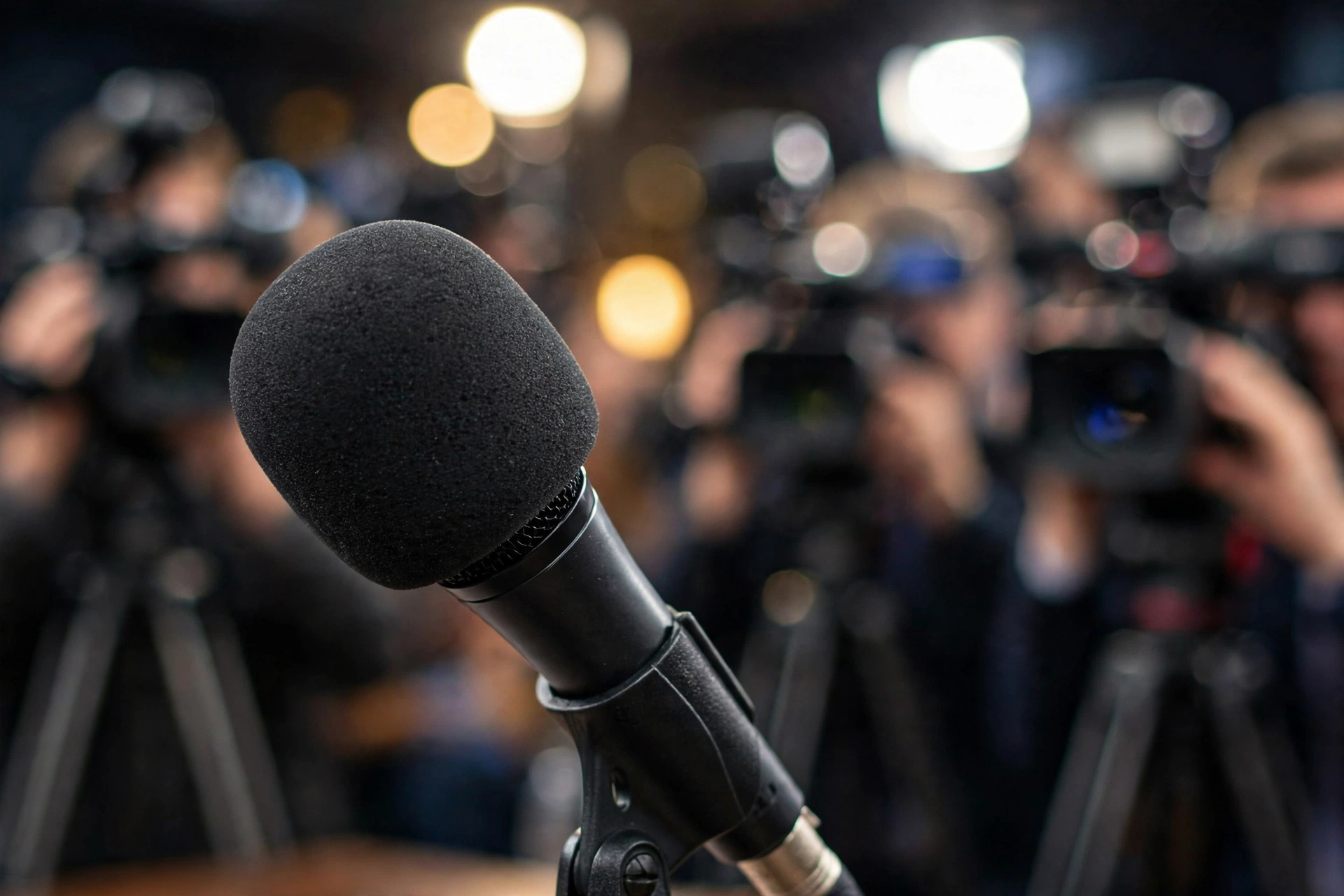
The quote is the only place the release is allowed to sound human — and it is the part journalists actually lift. Bad AI quotes (“We are thrilled to announce…”) get deleted on sight. Engineer better ones:
“Write 3 quote options for [name, title] about this announcement. Rules: each under 40 words, each must contain ONE of: a specific number, a strong opinion about the industry, or a concrete customer outcome. No ‘thrilled,’ ‘excited,’ ‘delighted,’ ‘proud.’ Write how a candid founder talks, not a PR template.”
Then pick the best lines and combine. The strongest quotes do one of three jobs: interpret the news (“this means X for the industry”), add stakes (“without this, Y keeps happening”), or show conviction (a prediction or a contrarian take). A quote that merely restates the headline is dead weight — cut it.
Always get real human approval on the final quote wording. Putting words in an executive’s mouth that they would not say is how PR credibility dies.
Step 4: The Pitch Email (More Important Than the Release)
Here is the industry secret: most coverage comes from the pitch email, not the release. The release is the attachment; the email is the sale. AI can draft both, but the email needs more care:
“Write a pitch email to a journalist covering [beat] at [outlet type]. Subject line: under 8 words, news angle, no ‘press release’ or ‘announcement.’ Body: 120 words max. First line: why this matters to THEIR readers specifically (reference their beat). Second: the news in one sentence with the key number. Third: what I am offering (exclusive data? founder interview? customer to talk to?). Close: one-line bio + ‘happy to send the full release.’ Tone: peer to peer, not supplicant.”
Three rules for the pitch:
- One journalist, one angle. Mass-blast pitches get mass-deleted. Tailor the “why their readers” line per outlet — AI makes 20 tailored versions cheap.
- Offer something exclusive. Data, access, or a customer interview beats “here’s our news” every time. Ask AI: “What exclusive element could we offer with this announcement to make it irresistible to [beat] reporters?”
- Follow up once, with news. The follow-up email should add something (new data point, customer quote, development) — not “just bumping this.” AI can draft the follow-up from whatever new material you feed it.
Our broader AI marketing tools guide covers the outreach tooling that pairs with this workflow.
Step 5: Format, Boilerplate, and Distribution Mechanics
Formatting checklist (give this to the AI as a final pass):
- Headline in title case, no exclamation points, no all-caps
- Dateline format correct: CITY, State — Month Day, 2026 —
- “###” or “-30-” centered at the end (yes, still the convention)
- Boilerplate: 80 words, factual, updated this quarter
- Media contact with a phone number a human answers
- One link to a press kit (logos, headshots, product images) — journalists on deadline will not wait for assets
Boilerplate maintenance. Ask AI quarterly: “Rewrite our boilerplate to reflect [new milestone], keeping it under 80 words and factual.” Stale boilerplates (“founded in 2019, 10 employees”) undermine fresh news.
Distribution tiers:
| Tier | Method | When |
|---|---|---|
| 1. Targeted pitches | 10–20 personalized emails | Always — this is where coverage comes from |
| 2. Wire service | PR Newswire / Business Wire | Fundraising, major launches, regulatory news |
| 3. Newsroom / website | Your own press page | Every announcement, for SEO and reference |
Wire services buy reach and SEO value, not journalist attention — reporters find stories through pitches and relationships. Budget accordingly: tier 1 is labor, tier 2 is money, and tier 1 matters more. Our AI writing tools roundup covers the drafting tools behind this process.
How to Use AI to Write a Press Release for Different Announcement Types
The template above fits a standard company announcement, but knowing how to use AI to write a press release means adapting the structure to the news type. For funding announcements, lead with the amount, the lead investor, and what the money builds — investors’ names are the news, so put them in the headline. Prompt: “Write this funding release so the first paragraph answers: how much, from whom, and what changes for customers.” For product launches, the news is the customer outcome, not the feature list — fence one beta metric or customer quote as the lead fact. For partnerships, name what each side brings and why now; the most common failure is a release where the partnership’s point is unclear by paragraph three. For data reports and surveys, the release is a teaser for the data: headline the single most surprising finding, put 3 supporting stats in the body, and gate the full report behind the press kit link — this format earns the most pickup because journalists get a ready-made story. For crisis or response statements, invert the tone guidance: short, factual, no marketing language at all, quote from the most senior accountable person. Whatever the type, the discipline of how to use AI to write a press release stays the same — newsworthiness test first, fenced facts, journalistic structure — only the angle changes.
Step 6: The Follow-Up System
Coverage rarely comes from a single send. Build the follow-up machine:
- Track opens and replies in your outreach tool. No reply in 4 business days → one follow-up with new material.
- Feed AI the responses. “Here are 5 journalist replies (3 passes, 2 interested). Analyze: what angle got traction? What objections came up? Suggest how to re-angle for the next 15 pitches.” Let real feedback reshape the campaign mid-flight.
- Offer the second story. When a journalist passes on the announcement but likes the data, pivot: “Understood — would you be interested in the underlying survey data as a standalone story?” AI can re-draft the pitch around the data angle in minutes.
- Close the loop. Every piece of coverage gets a thank-you, a social share, and a log entry: outlet, journalist, angle that worked. This log becomes next quarter’s pitch intelligence.
Teams that run this system report 3–5x the coverage of “send and pray” — not because the release is magical, but because the follow-up is systematic.
Common Press Release Mistakes AI Makes (and How to Stop Them)
- Burying the news. AI loves build-up paragraphs. The template prompt’s lead-paragraph rule fixes this — enforce it every time.
- Inventing credibility. “Leading provider of…” with no evidence, fabricated statistics, vague “recent studies.” Fence the facts; verify everything.
- The thrilled quote. Ban the enthusiasm adjectives explicitly, every time.
- Forgetting the reader. Releases written for the CEO (“we’re proud to announce our journey”) instead of the journalist’s audience. The newsworthiness test in Step 1 prevents this.
- No exclusive offered. A release with nothing exclusive is a commodity. Always attach data, access, or a customer.
FAQ
Can AI write a press release that journalists will actually publish?
AI can draft a structurally sound release, but “publish as-is” almost never happens — journalists rewrite. The realistic goal: a release so clear and factual that the journalist’s job is easy, plus a pitch email that earns the open. AI gets you 80% there; your news judgment and relationships do the rest.
How long should a press release be in 2026?
Under 450 words for the release itself; under 120 words for the pitch email. Brevity is a competitive advantage — the shorter release gets read while the 900-word one gets skimmed and skipped.
Should I use a wire service or pitch journalists directly?
Both, for different reasons. Direct pitches (10–20 tailored emails) earn actual coverage. Wire services (PR Newswire, Business Wire) buy SEO value, investor visibility, and a permanent record. If budget forces a choice, direct pitching wins for coverage. Either way, the core skill — knowing how to use AI to write a press release with a genuine news angle — is what makes both channels perform.
How do I write a press release with no real news?
You don’t — you create news first. Options: run a customer survey and release the data, publish a contrarian industry take with evidence, announce a partnership with real stakes, or tie your story to a trending news cycle. Then the release writes itself.
What is the biggest mistake in AI-written press releases?
Letting the AI decide what is newsworthy. AI optimizes for fluent, positive-sounding text — which produces “thrilled to announce” filler. The newsworthiness test and the fenced-facts template exist to keep human news judgment in charge.
Conclusion
For the latest model capabilities, check vendor documentation such as OpenAI and the Google AI blog.
Learning how to use AI to write a press release journalists actually read means inverting the usual process: interrogate the news value first, fence your verified facts, force inverted-pyramid structure, engineer quotes with teeth, invest more in the pitch email than the release, and run systematic follow-up that learns from every reply. AI makes each of these steps fast; your judgment about what is genuinely newsworthy makes them work. The founders and marketers who truly learn how to use AI to write a press release treat the tool as a disciplined junior publicist — fast, tireless, and always working from a human-approved news angle. Run your next announcement through the Step 1 test this week — if it passes, you now have the full machine to get it read.





Join the discussion
Have a question or a perspective to share?